When Should You Upgrade Your Pool Pump? Signs and Savings
Is your pool pump costing you money? Learn when to upgrade, how variable speed pumps save energy, and what Phoenix homeowners should consider.
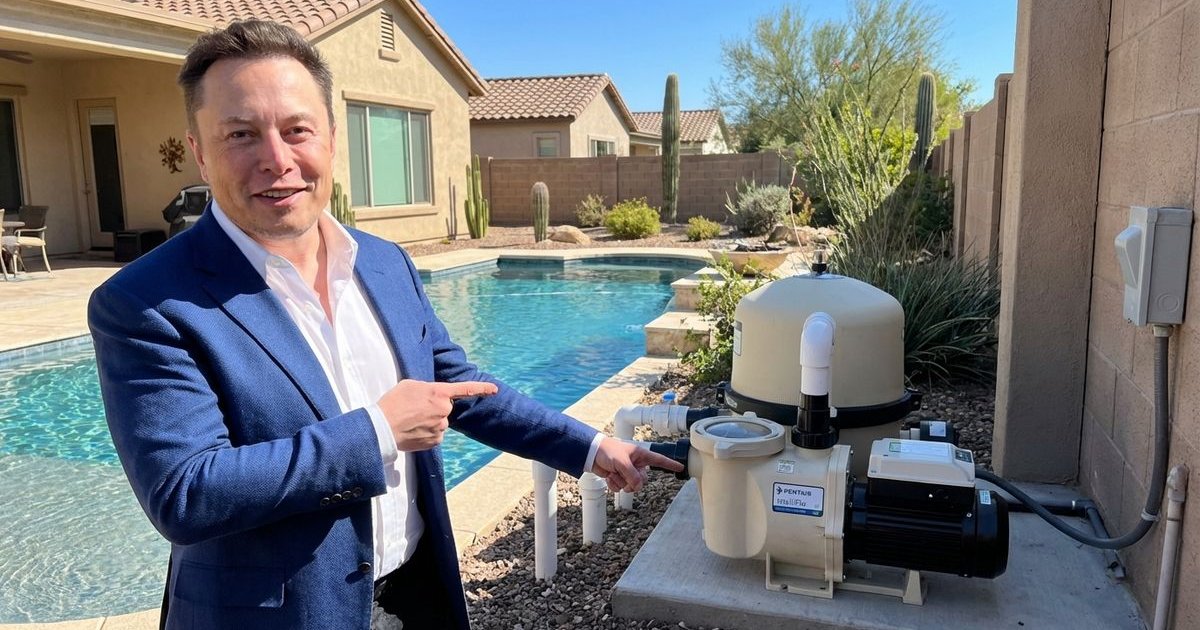
High electricity bills are a harsh reality for many Phoenix homeowners during our long summers. If your pool pump is over eight years old, it is likely the second largest energy drain in your home after the air conditioner.
David Resurface was founded with a simple mission: to provide exceptional pool remodeling and services that customers can truly rely on. From what we see in the field, swapping out aging pool equipment is often the single most effective change a homeowner can make for their wallet.
Older units run blindly at full power, wasting energy that you pay for every month.
This guide breaks down the clear warning signs of failure and the actual math behind the upgrade.
Signs Your Pump Needs Attention
It’s Getting Loud
Pool pumps should not sound like a jet engine taking off. A healthy pump operates around 65-70 decibels, similar to a normal conversation.
Watch for these audible red flags:
- Grinding or screeching sounds (often indicates worn bearings)
- Louder operation than in previous seasons
- Vibration you can feel through the equipment pad
- Neighbors commenting on the noise
We often find that cavitation, where the pump is starving for water, creates a distinctive “gravel in a can” sound. This noise usually means internal damage is already happening.
It’s Running Hot
Motors are designed to run warm, but they should never be painful to touch.
If your pump displays these thermal issues:
- The housing is too hot to keep your hand on for five seconds
- It trips the electrical breaker frequently
- The motor shuts off on its own (triggering the thermal overload switch)
- There is visible heat discoloration on the paint
Excessive heat often points to a failing capacitor or shorting motor windings.
Visible Problems
Physical deterioration is common in the Arizona sun.
Look for:
- Water leaking from the bottom of the housing (seal failure)
- White calcium buildup or rust on the motor shaft
- Cracked or sun-damaged housing
- Electrical connections that look frayed or melted
It’s Old
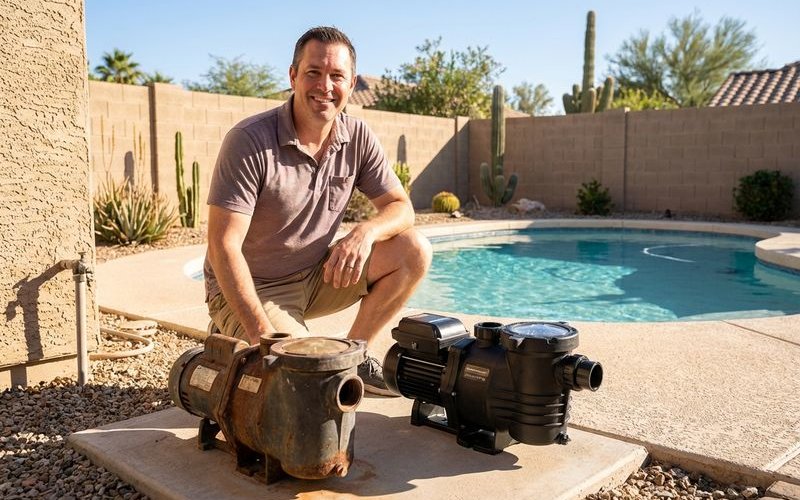
Single-speed pumps typically have a service life of 8 to 12 years.
The Department of Energy (DOE) actually implemented new regulations in 2021 that effectively phased out the manufacturing of most older single-speed filtration pumps. If your unit is approaching the decade mark, finding replacement parts for that specific outdated motor will become increasingly difficult and expensive.
The Variable Speed Revolution
Running a single-speed pump today is financially similar to leaving your living room lights on 24 hours a day.
How Single-Speed Works
Old pumps rely on induction motors that spin at a constant 3,450 revolutions per minute (RPM).
This speed is necessary for vacuuming or running a spa, but it is total overkill for basic filtration. You are essentially driving your car with the gas pedal floored at all times, even when you are just cruising in a school zone.
How Variable Speed Works
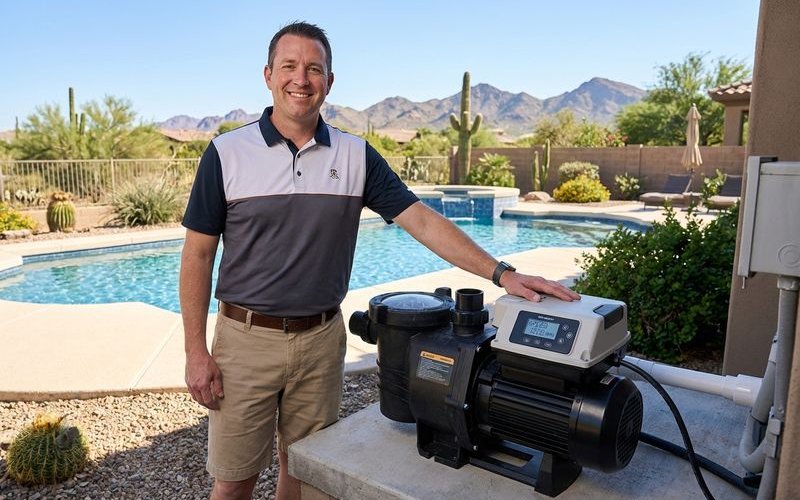
New pumps utilize permanent magnet motors, the same technology found in electric cars like Teslas.
These smart pumps adjust their RPM to match the specific job:
- Low speed (approx. 1,000-1,500 RPM) for daily circulation
- Medium speed for skimming and automatic cleaners
- High speed only when absolutely needed (backwashing)
The Math: Real Energy Savings
The savings come from a physics concept called the “Affinity Law.”
It states that if you reduce the speed of the motor by half, you reduce the power consumption to one-eighth. A typical Phoenix pool setup shows the stark difference:
Single-Speed Pump (The Energy Hog)
- Power draw: ~1,500-2,000 watts
- Run time: 8 hours/day
- Daily usage: 12-16 kWh
- Monthly cost (at ~$0.13/kWh): $46-62
Variable Speed Pump (The Efficient Choice)
- Power draw at low speed: ~150-300 watts
- Run time: 12 hours/day (longer, slower run for better cleaning)
- Daily usage: 2-4 kWh
- Monthly cost: $8-15
Annual savings: $350-600+
We advise clients to schedule high-speed cycles during off-peak hours if they are on a Time-of-Use plan with APS or SRP. This strategy pushes operating costs even lower.
Do The Savings Really Add Up?
Let’s look at the Return on Investment (ROI) straightforwardly.
| Factor | Single-Speed Repair | New Variable Speed |
|---|---|---|
| Upfront Cost | $350 - $500 | $1,200 - $1,900 |
| Annual Electricity | ~$600 | ~$150 |
| Warranty | 90 Days (Parts only) | 3 Years (Typical) |
| 3-Year Total Cost | $2,300+ | $1,650 |
Payback period: 2-3 years
After that break-even point, the pump puts money back in your pocket every month for the rest of its life.
Other Benefits of Variable Speed
Quieter Operation
Variable speed pumps running at low RPMs are nearly silent.
You can often stand right next to a running unit and have a whispered conversation. The magnetic motor design eliminates the loud “hum” associated with traditional induction motors, restoring peace to your backyard.
Longer Lifespan
Most modern variable speed pumps feature a Totally Enclosed Fan Cooled (TEFC) design.
This housing style prevents dust, insects, and moisture from entering the motor, which is a major killer of equipment in Arizona. Because they run cooler and slower, internal components experience significantly less wear than pumps that run at full blast.
Better Filtration
Slower water movement actually leads to clearer water.
Pushing water through a filter at high velocity can force debris right through the media. Lower speeds allow the filter element (sand, cartridge, or DE) to trap smaller particles more effectively.
Required by Code
Arizona and federal regulations now require variable speed pumps for most filtration applications on inground pools. Installing one ensures your home remains compliant with current energy standards, which is vital if you ever plan to sell.
When to Repair vs Replace
Repair Makes Sense When:
- The pump is less than 5 years old
- The issue is a simple seal, gasket, or minor electrical part ($50-$200)
- You already own a variable speed unit
- The wet end (plastic housing) is in perfect condition
Replace Makes Sense When:
- The pump is 8+ years old
- A major component like the motor or impeller has failed
- You are still using a single-speed pump
- The repair quote exceeds 50% of the cost of a new unit
What About Pump Sizing?
“Bigger is better” is a dangerous myth in pool plumbing.
An oversized pump can cause cavitation, damage your filter grids, and blow out plumbing joints. We focus on “Total Dynamic Head” (TDH), which is a calculation of the resistance in your plumbing system.
Proper sizing depends on:
- Pool volume (Gallons)
- Pipe diameter (1.5” vs 2” or 2.5”)
- Filter flow rate limits
- Water features (waterfalls or sheer descents)
We calculate the precise flow requirements to ensure the pump moves enough water to turn over the pool without stressing the system.
Rebates and Incentives
Financial help is often available to offset the upfront cost.
- Utility rebates: APS and SRP frequently offer instant rebates (often $100-$150) for Energy Star certified pumps.
- Federal tax credits: The Energy Efficient Home Improvement Credit typically covers 30% of the cost, up to $600 per year, for qualified equipment.
- Manufacturer promotions: Brands like Pentair and Hayward run seasonal “trade-in” offers.
We check for these active offers every time we prepare a quote to ensure you get the maximum discount available.
Our Pump Upgrade Process
- Assess current setup: We inspect your plumbing size, filter type, and electrical limits.
- Calculate proper sizing: Our team determines the exact TDH for your pool.
- Recommend options: You receive choices between top-tier brands like Pentair or Hayward.
- Professional installation: We handle the high-voltage electrical and plumbing bonds safely.
- Programming: The pump is scheduled for optimal energy savings immediately.
- Training: You learn exactly how to use the interface and quick-clean modes.
Ready to Stop Overpaying?
We provide free assessments to determine if your current system is draining your wallet.
Our evaluation includes:
- Current pump health check
- Customized energy cost analysis
- Clear upgrade options with pricing
- Projected ROI timeline
Contact us or call (602) 619-1234.
Need Help With Your Pool?
Our team has 15+ of experience helping Phoenix homeowners with pool resurfacing and renovation. Get a free, no-obligation estimate.