How Much Does Pool Resurfacing Cost in Phoenix? (2026 Guide)
Complete breakdown of pool resurfacing costs in Phoenix. Plaster, Pebble Tec, and Diamond Brite pricing with factors that affect your quote.
If you live in the Valley, you already know what the Arizona sun does to outdoor surfaces. Your pool interior is no exception. We see this reality every day across Phoenix.
The intense UV rays and our region’s naturally hard water accelerate wear and tear faster here than in other parts of the country. You are likely seeing rough spots that snag swimsuits or discoloration that chemicals can’t fix.
We established David Resurface to help homeowners navigate these exact challenges with transparency. This guide breaks down the real costs you can expect for pool resurfacing in 2026. It also covers the specific “gotchas” that pop up in local projects.
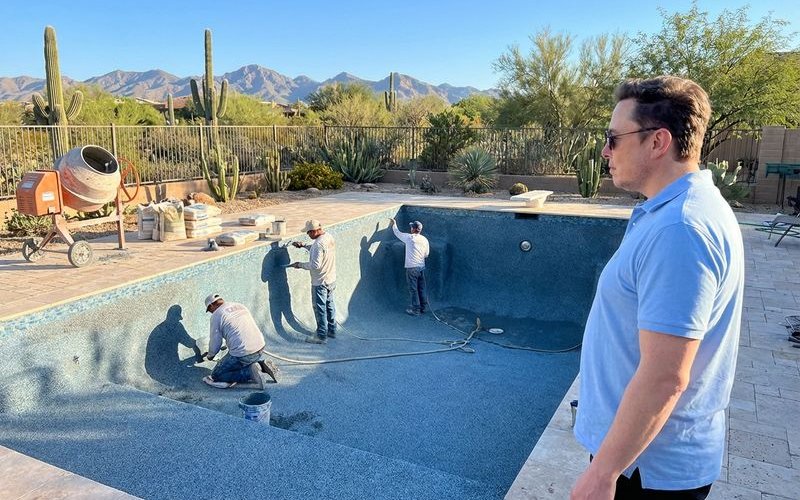
Quick Price Summary: Phoenix Market Rates (2026)
Prices have adjusted slightly this year due to rising material costs and labor demand in Maricopa County.
Here is what local homeowners are currently paying for a standard 12,000 to 15,000-gallon play pool:
| Finish Type | Average Cost (Standard Pool) | Price Range | Est. Lifespan in AZ |
|---|---|---|---|
| White Plaster (Standard) | $5,500 | $4,800 - $8,500 | 5-7 Years |
| Quartz / Diamond Brite | $8,200 | $6,500 - $12,500 | 10-12 Years |
| Pebble (Mini or Regular) | $11,500 | $8,500 - $16,000 | 15-20+ Years |
| Polished Aggregate (Hydrazzo) | $14,000 | $12,000 - $20,000 | 20+ Years |
These ranges cover the essentials. This includes draining, standard prep (chipping), bonding, application, and the initial refill supervision.
What a Complete Quote Should Include
A legitimate proposal in Phoenix needs to be comprehensive to avoid surprise change orders.
We ensure every estimate covers these critical phases:
- City-Compliant Draining: Phoenix regulations require draining into sanitary sewer cleanouts (not the street or storm drains).
- Surface Preparation: Undercutting tile lines and around fittings to ensure a flush seal.
- Bond Coat Application: A glue-like layer is mandatory for the new surface to adhere to the old gunite.
- The Finish Material: Application of your selected plaster, quartz, or pebble.
- Acid Wash & Exposure: For pebble pools, this step reveals the aggregate texture.
- Startup Chemicals: The first 7 days are critical for curing.
You should always ask if “startup” is included. Many low-ball bidders leave you to balance the chemicals yourself immediately after filling. This is a risky move that can void material warranties.
The 5 Factors That Drive Your Specific Cost
1. Pool Size and Depth
Square footage is the primary math behind the quote.
Contractors generally categorize pools into three tiers:
- Play Pool (Under 85 perimeter ft): Base pricing applies here.
- Diving Pool (Deep end 8ft+): The extra surface area adds 20-30% to material costs.
- Perimeter Overflow / Negative Edge: These complex designs require specialized labor and scaffolding.
2. The Finish Material
Your choice here dictates the longevity and the price tag.
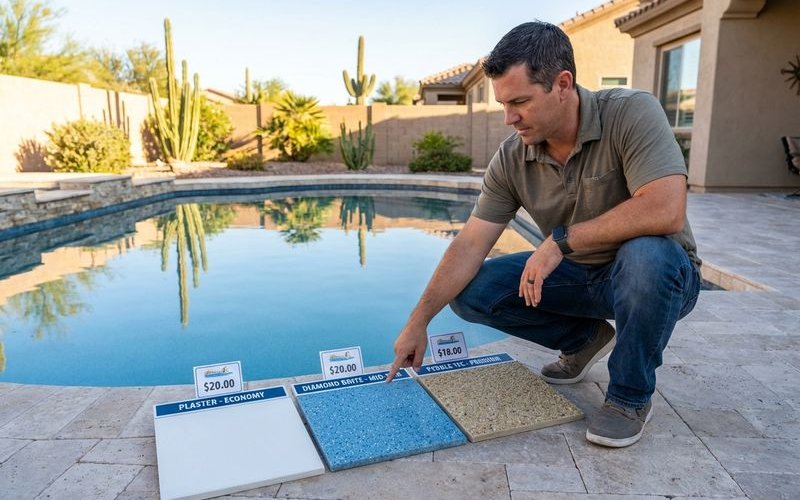
Standard White Plaster ($4.50 - $6.00/sq ft) This is the classic smooth white look. However, Phoenix’s hard water (high calcium) is tough on standard plaster. It often shows staining and etching within five years.
Quartz Aggregate ($7.00 - $10.00/sq ft) Brands like Diamond Brite mix quartz sand with cement. This strengthens the surface against chemical erosion better than standard plaster.
Pebble Finishes ($9.00 - $14.00/sq ft) This is the gold standard for Arizona. The stone aggregate is virtually bulletproof against our water chemistry. While the upfront cost is higher, you likely won’t need to resurface again for two decades.
3. Current Surface Condition
We often find issues hiding beneath the old surface once the pool is drained.
Common repair add-ons include:
- Delamination: If the old plaster makes a “hollow” sound when tapped, it has separated from the shell. These spots must be chipped out entirely.
- Rebar Rust: Brown spots on your pool floor usually mean the steel rebar has oxidized. This requires cutting out the concrete, sealing the steel, and patching it ($250-$500 per spot).
- Crack Repair: Structural cracks need specialized staples or epoxy injection to prevent them from mirroring through the new surface.
4. In-Floor Cleaning Systems
Many Phoenix pools feature pop-up cleaning heads (like Paramount or Caretaker systems).
These heads cannot simply be plastered over. The crew must carefully chip around each head and install new collars to ensure they sit flush with the new surface height. Expect to pay $75 to $150 per head for this detailed labor.
5. Tile and Coping Updates
Most homeowners choose to update their waterline tile while the pool is empty.
Old tile often falls off during the heavy chipping process anyway.
- Standard Ceramic Tile: $25 - $35 per linear foot installed.
- Glass Tile: $45 - $75 per linear foot (requires special thin-set and cutting blades).
- Coping (The pool edge): Replacing standard bullnose pavers adds significant cost, usually starting at $3,500 for an average pool.
Hidden Costs: The “Arizona Specials”
You should budget for a few items that rarely appear on the flashy marketing flyers.
The Water Bill
Refilling a 15,000-gallon pool isn’t free. Depending on your specific City of Phoenix or municipality water tier, this refill can cost between $100 and $250 on your next utility bill.
LED Light Upgrades
If you still have an old halogen bulb, this is the time to switch. Changing a light fixture requires lowering the water level anyway. We recommend upgrading to color LED lights during resurfacing to save on the labor cost of draining the pool later.
Pool Equipment Repairs
The resurfacing process puts stress on your existing equipment. When we start the pool back up, the pumps run 24/7 to filter the dust. Old filters or pumps sometimes fail under this sudden workload. It is smart to set aside $500 for emergency equipment tweaks.
Strategic Timing: When to Resurface
The temperature affects the quality of your cure.
The Best Time: October through April. Moderate temperatures allow the plaster or pebble to cure slowly and evenly. This results in a stronger, more durable finish.
The Riskier Time: June through August. When it is 110°F, the material dries incredibly fast. This can lead to “check cracking” (tiny surface fissures) if the crew isn’t extremely fast and careful. If you must resurface in summer, ensure the contractor tents the pool or works during early morning hours.
Making the Right Choice for Your Home
The “best” option isn’t always the most expensive one. It depends on your future plans.
Stick with Plaster If:
- You are selling the home within 3 years.
- You are on a strict budget and just need a clean, white sanitary surface.
- You prefer a perfectly smooth texture over the bumpiness of pebble.
Upgrade to Pebble If:
- You plan to keep the house for 10+ years.
- You want a darker water color (Deep Blue, Teal, or Black).
- You are tired of seeing calcium scale lines (pebble hides these much better).
How to Compare Quotes Like a Pro
Getting three bids is standard advice. Knowing how to read them is the secret.
- Check the Warranty Fine Print: Does the warranty cover labor or just material? A “Lifetime Warranty” on the pebble material is useless if the application labor is only covered for one year.
- Verify the ROC License: Arizona has strict contracting laws. Look for a valid ROC license for “R-6” or “KA-6” classifications on the Arizona Registrar of Contractors website.
- Ask About the Crew: Does the company use in-house employees or subcontract everything? In-house crews generally offer better accountability.
Ready to Refresh Your Pool?
We believe in giving you the numbers straight, without the high-pressure sales tactics.
Our team provides free, detailed assessments that include:
- A physical inspection of your current surface (checking for hollow spots).
- A clear, itemized quote with no hidden fees.
- Sample boards of the latest pebble and quartz finishes.
Contact us or call (602) 619-1234 to schedule your free estimate and get your pool ready for the next swimming season.
Need Help With Your Pool?
Our team has 15+ of experience helping Phoenix homeowners with pool resurfacing and renovation. Get a free, no-obligation estimate.