Pool Deck Too Hot to Walk On? 4 Solutions for Phoenix Homeowners
How to fix a scorching pool deck in Arizona. Cool Deck coating, pavers, and other solutions that actually work in 110°F+ summers.
Pool Deck Too Hot to Walk On? 4 Solutions for Phoenix Homeowners
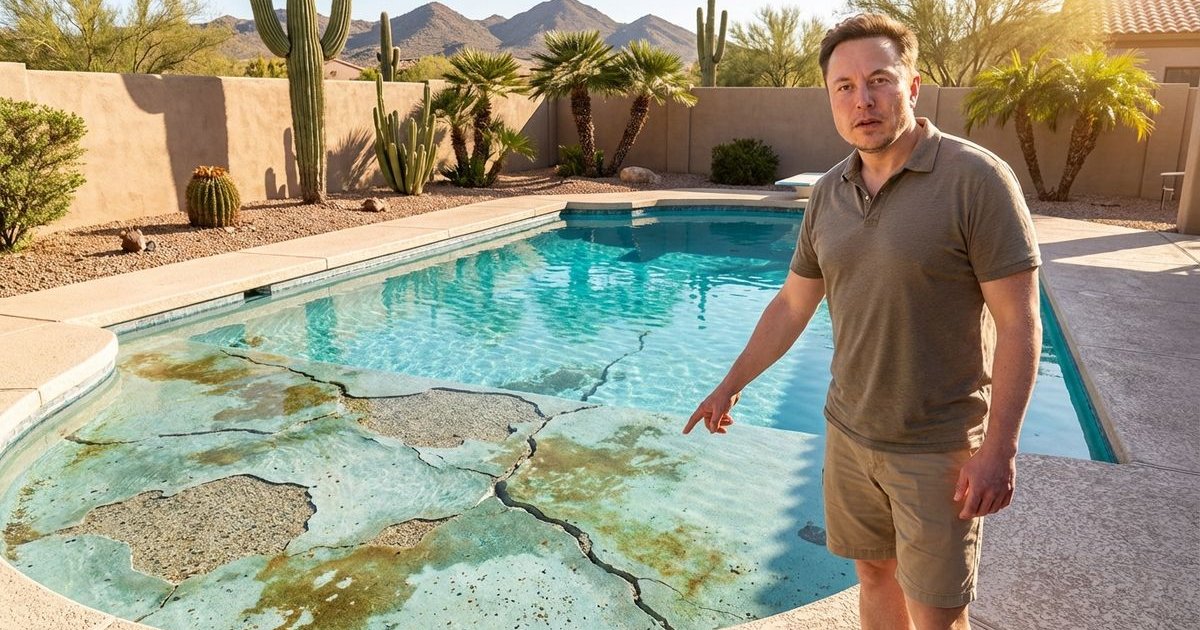
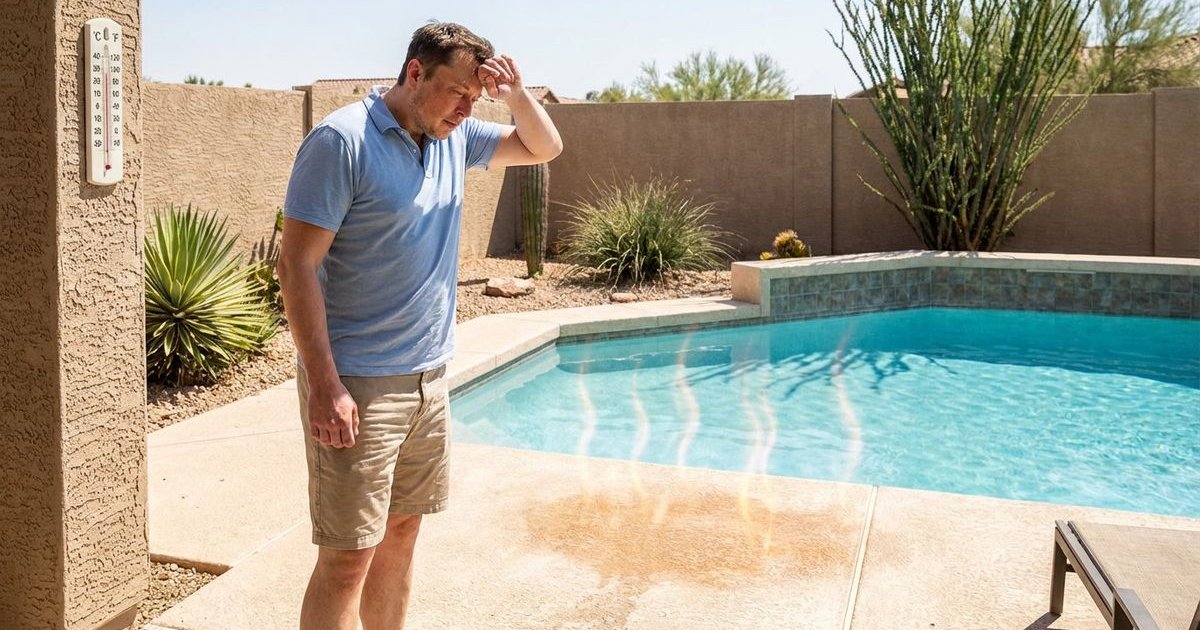
There’s nothing worse than the “Phoenix Shuffle”—that frantic, tiptoeing sprint across a scorching deck just to reach the water. If your backyard feels more like a frying pan than an oasis, we have good news: you don’t have to burn your feet to enjoy a swim.
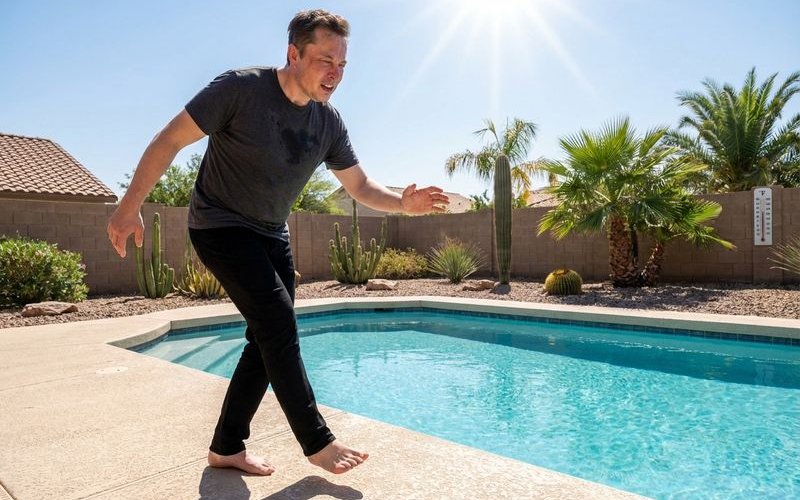
Why Phoenix Pool Decks Get So Hot
It’s not just the air temperature; it’s the thermal mass of your decking material. In the peak of a Phoenix July, plain gray concrete absorbs and holds onto solar radiation, creating a “heat island” right in your backyard.
On a day when the air is 110°F, your concrete deck isn’t just hot—it’s dangerous:
- Surface Temperature: Easily exceeds 160°F by 3:00 PM.
- Burn Risk: At 150°F, human skin can suffer second-degree burns in under two seconds.
- The “So What”: This heat doesn’t just hurt your feet; it radiates upward, raising the ambient temperature of your entire patio area by 5-10 degrees.
This happens because standard concrete has high thermal conductivity. Darker colors or dense stone like slate make this significantly worse, absorbing up to 90% of the sun’s energy.
Solution #1: Acrylic “Cool Deck” Coating (Best Value)
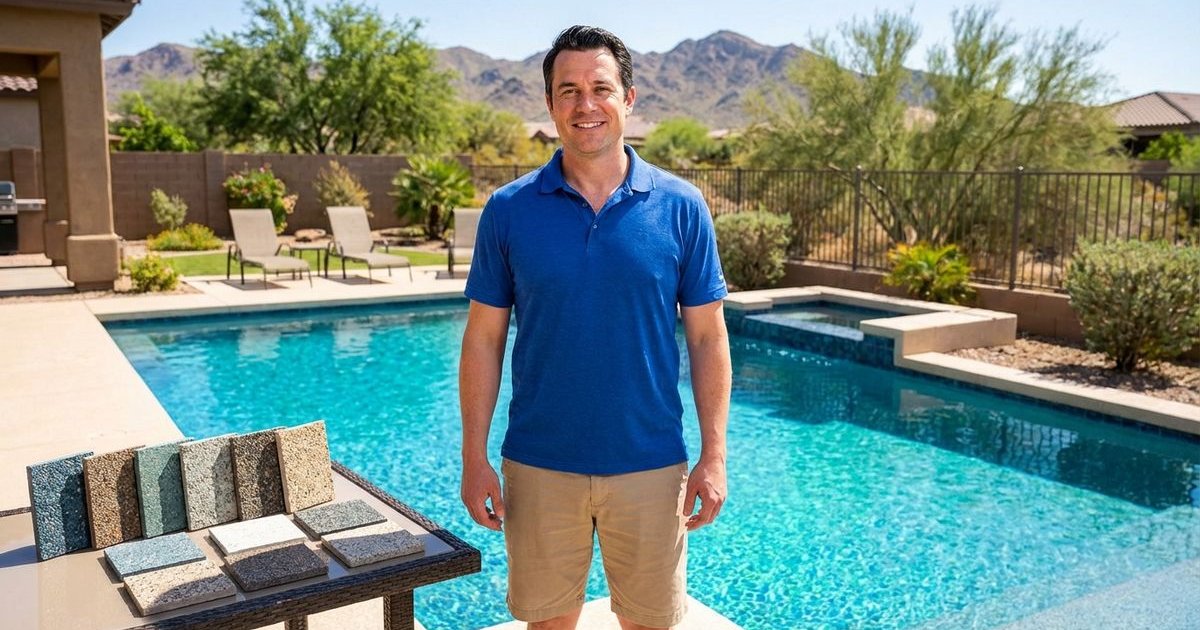
You’ve likely heard the term “Kool Deck,” but here is the insider reality: the original trademarked Kool Deck by Mortex is a concrete-based topping that must be applied to freshly poured concrete. For existing pools, we almost always use Acrylic Lace, a synthetic textured overlay that is the industry standard for resurfacing.
How It Works
- Reflectivity: Light-colored acrylic reflects significantly more UV radiation than gray concrete.
- Texture: The “lace” texture creates tiny air pockets under your feet, meaning less of your skin touches the hot surface at once.
- Temperature Drop: A quality acrylic lace deck in a light color (like “Sand” or “Dove Gray”) typically stays 20-30°F cooler than bare concrete.
What to Expect (2026 Estimates)
| Factor | Details |
|---|---|
| Cost | $4 - $9 per sq. ft. (Installed) |
| Temp. Reduction | Moderate (Walkable but warm) |
| Lifespan | 8 - 12 years (with resealing) |
| Maintenance | Reseal every 3-5 years |
Insider Tip: The “Resurface” Reality
Most people don’t know that “Cool Deck” isn’t a brand name for every textured deck. If you ask for “Kool Deck” on an existing pool, a contractor might sell you an acrylic overlay but call it by the generic name.
- Pro Tip: Verify you are getting a 100% Acrylic overlay. It is more flexible than cement-based toppings, making it less likely to crack when the ground shifts during our desert temperature swings.
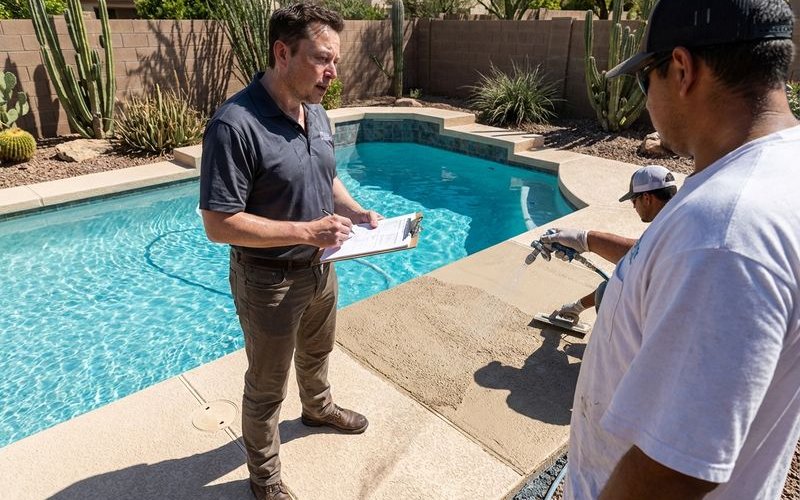
Solution #2: Travertine Pavers (Premium Option)
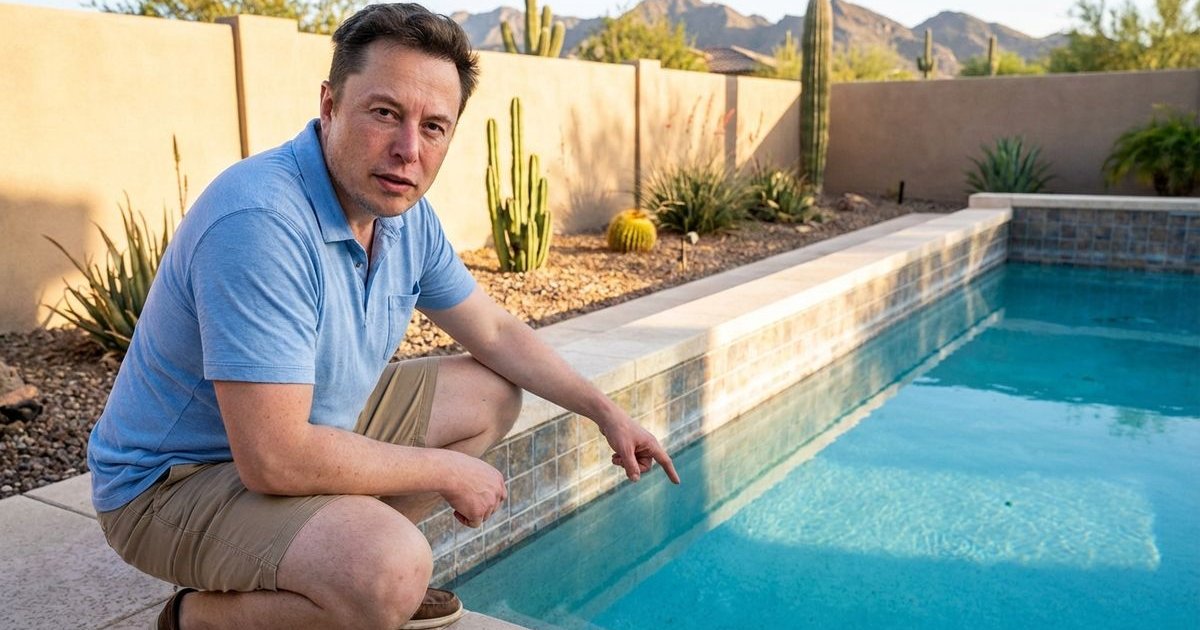
Travertine is the gold standard for Phoenix pools, and for good reason. This natural limestone, deposited by mineral springs, has a unique porous structure that transfers heat differently than man-made concrete.
Best Stone Options for Heat
- Light Travertine (Ivory/Beige): Tests show light travertine can stay around 130°F-138°F when concrete is 165°F. That is the difference between “warm” and “ouch.”
- Limestone: Denser than travertine but still cooler than concrete if chosen in white or cream tones.
- Shell Stone: Extremely cool due to fossilized shells, but more porous and harder to keep clean.
Avoid These Materials
- Slate: incredibly dense and dark; acts like a griddle.
- Dark Granite: Retains heat long after the sun goes down.
- Standard Concrete Pavers: Often hotter than poured concrete because they are denser.
What to Expect (2026 Estimates)
| Factor | Details |
|---|---|
| Cost | $15 - $25 per sq. ft. (Installed) |
| Temp. Reduction | Excellent (The coolest hardscape option) |
| Lifespan | 25 - 50+ years |
| Installation | 5 - 10 days |
Insider Tip: The “Sand Set” Mandate
In Arizona, we have expansive clay soil (caliche) that heaves when wet.
- The Warning: Never let a contractor “mortar set” travertine (glue it down like tile) on a standard outdoor slab. It will crack.
- The Fix: We recommend Sand Set installation. The pavers sit on a bed of sand, allowing them to move slightly with the earth without cracking. It’s effectively earthquake-proof for your deck.
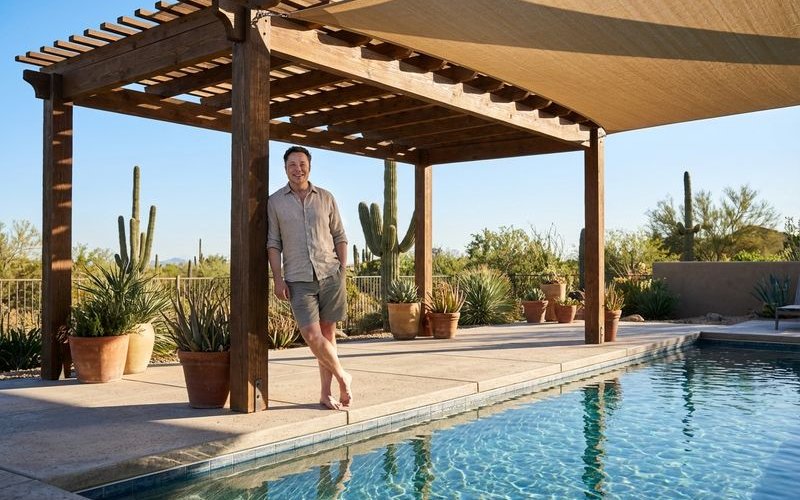
Solution #3: Shade Structures
Sometimes the most effective technology is a shadow. Blocking direct solar radiation can drop surface temperatures by 40°F or more, regardless of the material underneath.
High-Performance Options
- Shade Sails (HDPE Fabric): Look for high-density polyethylene fabrics (like Coolaroo or Comtex) which block 90-95% of UV rays but remain breathable so hot air doesn’t get trapped underneath.
- Cantilever Umbrellas: Large, offset umbrellas (10-13 ft) can cover the specific “entry zones” of your pool without permanent construction.
- Pergolas: Alumawood or steel structures offer permanent relief and can be fitted with misting systems.
Insider Tip: The Monsoon Factor
Phoenix monsoons bring microbursts with 60+ mph winds.
- The Fix: If you install shade sails, ensure they have “quick release” turnbuckles. You need to be able to take them down in 5 minutes when a dust storm warning hits, or the wind load could rip the anchors right out of your house stucco.
Solution #4: Artificial Turf & Composite
Grass is the coolest surface of all, but keeping real grass alive next to a pool is a maintenance nightmare. Artificial turf is the modern alternative, but it comes with a major heat warning.
The “Turf Burn” Warning
Standard artificial turf can actually get hotter than concrete, sometimes reaching 170°F. Plastic fibers absorb heat rapidly.
- The Solution: You must specify “Cooling Infill” (such as T-Cool or HydroChill). These infills trap moisture and use evaporative cooling to keep the turf 30-50°F cooler than standard turf.
Composite Decking
- Avoid: Traditional wood-plastic composites (like older Trex generations) retain massive amounts of heat.
- Choose: PVC-capped composite (like Azek Vintage Collection). These are engineered to dissipate heat better, though they will still be warmer than light travertine.
Practical Layout Tip
We advise against running turf right up to the coping (the pool’s edge).
- Why? Chlorinated water splashing on turf can leave white mineral deposits that are hard to clean.
- Design: Use a 2-foot border of travertine or Cool Deck at the water’s edge, then transition to turf for the lounging area.
Our Recommendation
After seeing thousands of Phoenix pools, here is how we break down the decision:
Tight Budget: Acrylic Lace Resurfacing
It’s the most cost-effective way to drop the temperature. If your deck is structurally sound, a fresh acrylic lace coating in a light “Sand” color will make it walkable again.
Best Long-Term Value: Travertine Pavers
If you plan to stay in your home for 5+ years, travertine pays for itself. It never needs repainting, it adds real resale value, and it stays cooler than any man-made coating.
The “Hybrid” Approach
Resurface the immediate pool deck with acrylic lace, but install a shade sail over the main walkway and seating area. This gives you spot-cooling where you need it most without the cost of a full remodel.
DIY Deck Cooling? Not Recommended
You will see buckets of “deck paint” at big-box stores. We strongly advise against rolling this on yourself.
- The Problem: These paints are thin (mil-thickness) and lack the texture required for grip. When wet, they become incredibly slippery—a major liability near a pool.
- The Risk: Without proper acid etching and grinding of the old surface, the new paint will begin to peel within one Arizona summer.
Ready to Cool Down Your Deck?
We specialize in helping Phoenix homeowners reclaim their backyards from the heat. Whether you need a high-quality acrylic resurface or a complete travertine transformation, we can help you choose the right material for your budget. Contact us today for a free estimate.
Don’t spend another summer sprinting across your patio—let’s fix it for good.
Need Help With Your Pool?
Our team has 15+ of experience helping Phoenix homeowners with pool resurfacing and renovation. Get a free, no-obligation estimate.