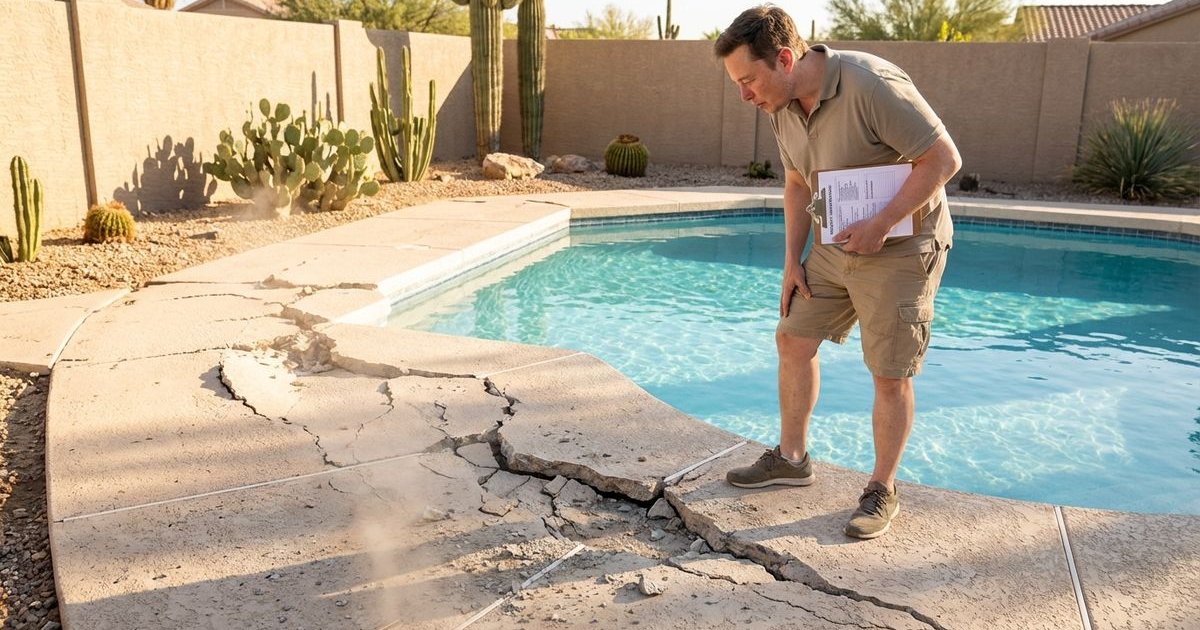
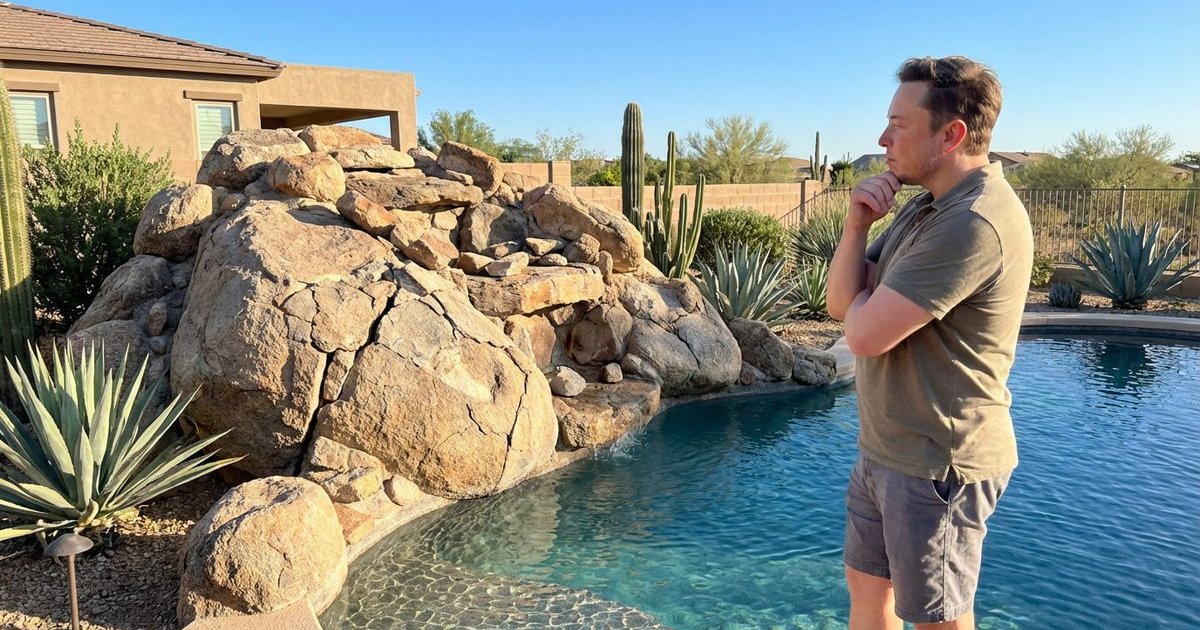
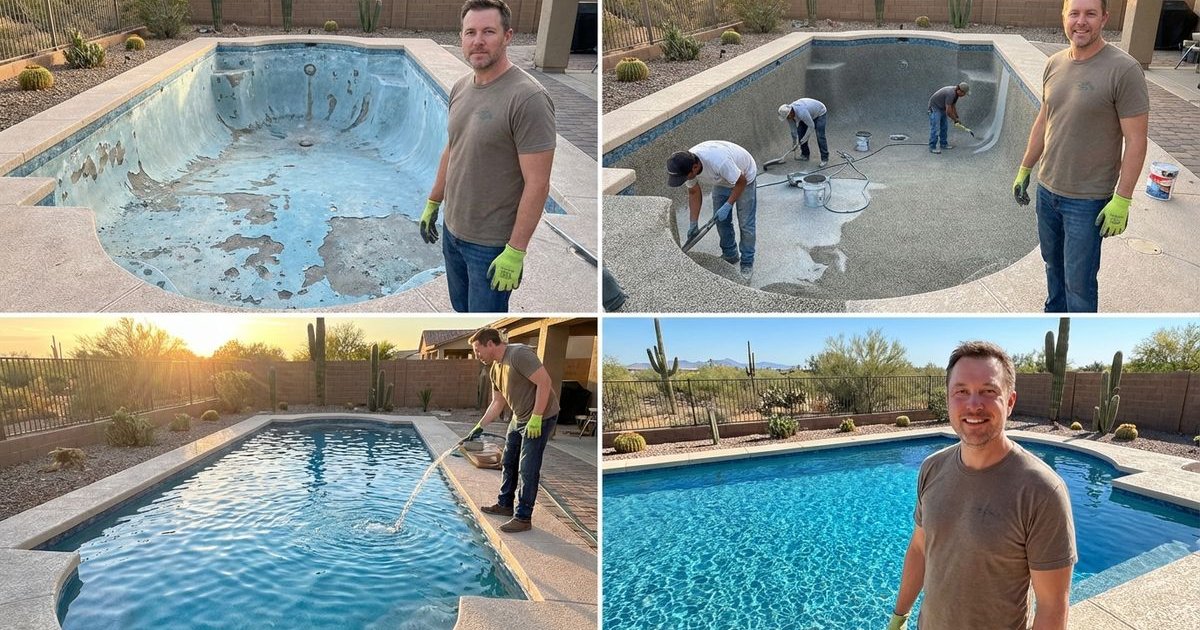
Pool Crack Repair: Options and Costs for Phoenix Pools
Types of pool cracks and how they're repaired. Surface cracks vs structural cracks, repair methods, and when resurfacing is the better choice.
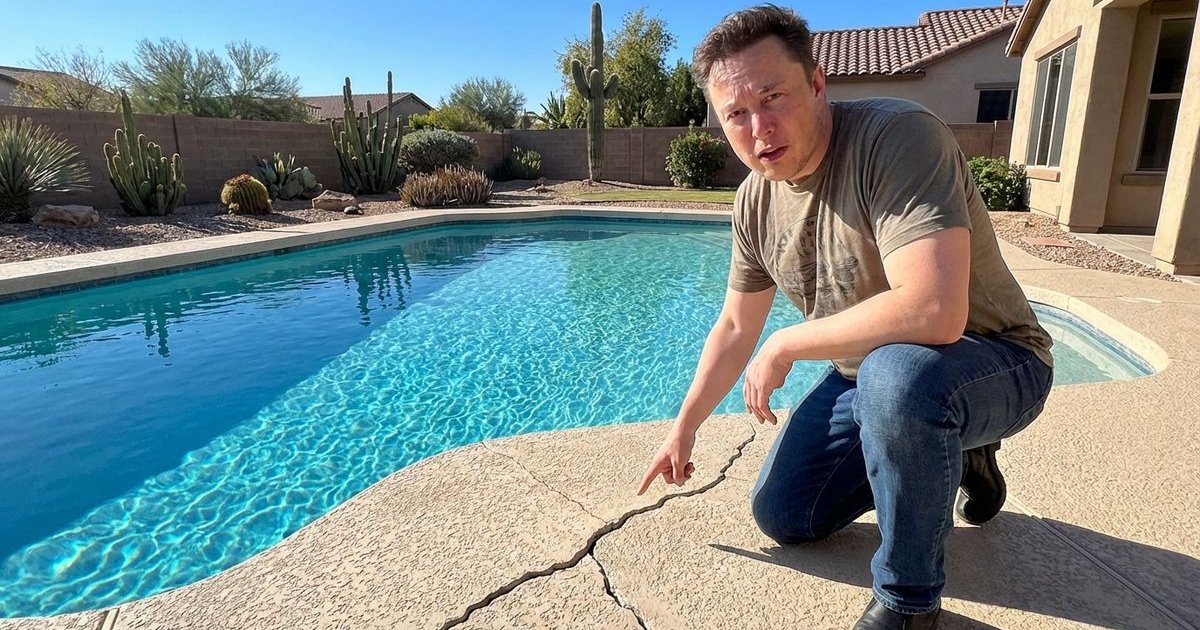
Found a crack in your pool?
It stops you cold.
You instantly worry about leaks, expensive bills, and torn-up backyards.
Here is the good news I share with most homeowners.
Not all cracks are catastrophes.
From my experience in the Phoenix area, many surface imperfections are strictly cosmetic.
Other signs point to structural shifts that require immediate attention.
I am going to help you tell the difference and explain exactly what structural pool repairs cost in our local market for 2026.
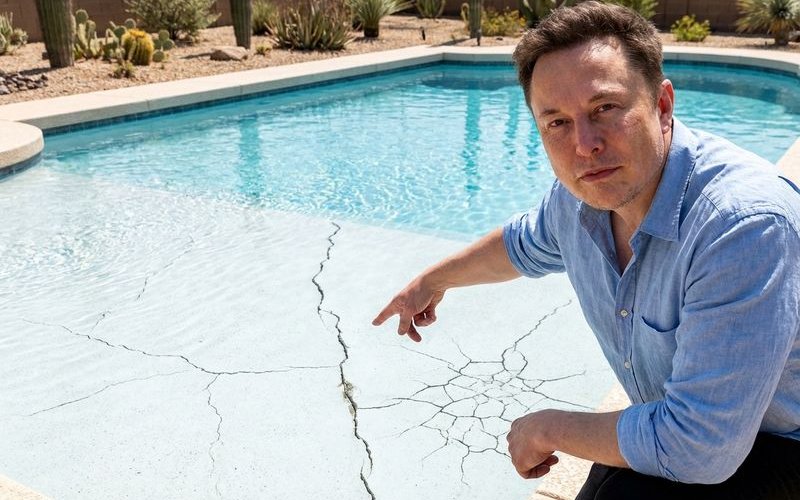
Types of Pool Cracks
Understanding the enemy is the first step.
We categorize cracks into two distinct groups based on severity and depth.
Knowing which one you have determines your budget and your timeline.
Surface Cracks (Cosmetic)
Industry pros often call these “check cracks” or “crazing.”
You will recognize them by these traits:
- Spider web patterns radiating across the surface
- Hairline fractures less than 1 millimeter wide
- Texture that feels smooth or barely noticeable to the touch
- Damage that stays confined to the plaster or pebble finish
Cause: These usually stem from the extreme hydration changes we see here in the desert. Normal aging, chemical imbalances, or rapid drying during the original plaster application create these fine lines.
Concern level: Low.
These are ugly, but they rarely leak.
Structural Cracks
These splits demand your attention.
A structural crack indicates the gunite or shotcrete shell itself has failed.
Look for these warning signs:
- You can easily insert a fingernail or credit card edge (~1/8 inch wide)
- The crack runs vertically or horizontally through the shell and coping
- The gap actively collects dirt or algae
- Water levels drop faster than normal evaporation rates
Cause: Arizona’s soil conditions are a primary culprit. Expansive clay soils, common in Maricopa County, swell when wet and shrink when dry, exerting massive pressure on pool shells.
Concern level: High.
These require professional stabilization to prevent total shell failure.
How to Tell the Difference
You don’t always need a pro to start the diagnosis.
We recommend three simple tests you can do this afternoon.
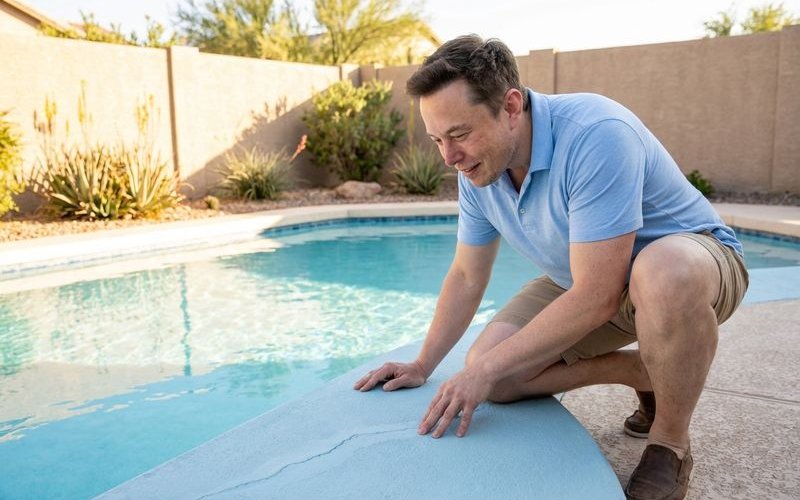
The Fingernail Test
Run your fingernail directly across the fissure.
If your nail glides over it smoothly, you are likely looking at a surface check crack.
Catches noticeably?
That physical snag suggests the gap has depth and width, pointing toward a structural issue.
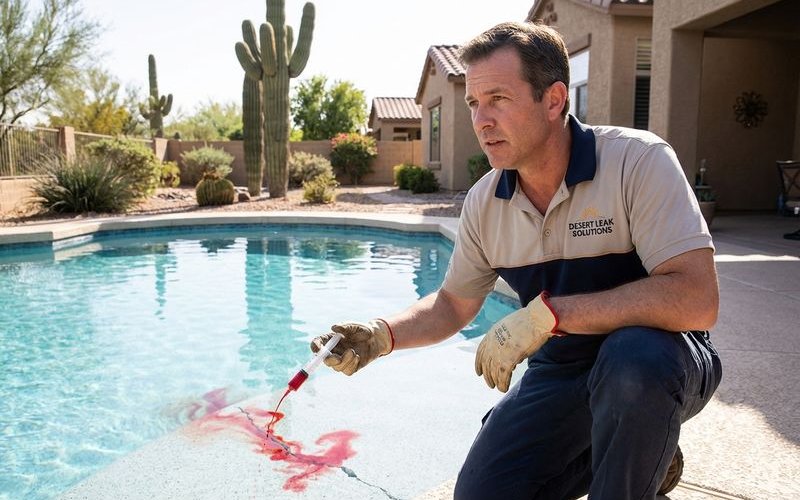
The Dye Test
This is the standard leak detection method.
Turn off your pool pump so the water is perfectly still.
Squirt a small amount of red food coloring or specific leak-test dye near the crack.
- Dye lingers or drifts away: The shell is sealed, and you have no leak.
- Dye gets sucked in: There is an active leak pulling water out of the pool.
Growth Check
Data is your best friend here.
Mark the exact ends of the crack with a waterproof grease pencil and write down the date.
Check it again in 30 days.
If the lines extend past your marks, the ground or shell is still moving.
Surface Crack Repairs
Cosmetic issues offer flexibility.
We find that many homeowners choose to manage these based on aesthetics rather than urgency.
Option 1: Live With Them
Minor surface cracks do not compromise the vessel’s integrity.
If the “spider webs” are only visible when the water is perfectly still, ignoring them is a valid strategy.
Waiting until your next scheduled resurfacing (typically every 10-15 years) saves money.
Option 2: Underwater Plaster Patch
You can address specific eyesores without draining the pool.
- Technicians apply a hydraulic cement or pozzolan-blended patch
- Material cures underwater
- Stops minor flaking
The Reality Check: The patch will never match your existing finish perfectly. New plaster stands out against faded surfaces like a bright white bandage.
Option 3: Full Resurfacing
This is the nuclear option for cosmetic issues.
Applying a new layer of Pebble Tec or quartz finish creates a uniform look and eliminates every surface crack instantly.
It solves the aesthetic problem permanently.
Cost Breakdown:
- Patching: $300-$900 (Minimum callout fees often apply)
- Resurfacing: $6,000-$18,000 (Depends on pool size and finish type)
Structural Crack Repairs
Cracks that penetrate the shell require mechanical reinforcement.
We use specific engineering methods to ensure the fix lasts longer than the original concrete.
Method 1: High-Pressure Crack Injection
Best for: Tight cracks that are no longer moving.
Process:
- Technicians clean the fissure with localized acid.
- Injection ports are installed every 6-12 inches.
- High-viscosity epoxy or hydrophobic polyurethane is injected at 1500+ psi.
- The material expands to fill the entire depth of the concrete shell.
Pros:
- Seals the leak immediately
- Strengthens the bond between concrete sections
- Minimizes debris creation
Cost: $400-$900 per crack.
Method 2: Structural Stapling (Torque Lock)
Best for: Active cracks or gaps wider than 1/8 inch.
This is the gold standard for Phoenix pools shifting in expansive soil.
Process:
- The pool is drained to access the area.
- Slots are cut perpendicular to the crack.
- Steel or carbon fiber staples are hammered into place.
- Torque is applied to mechanically pull the shell back together.
- The area is covered with high-strength hydraulic cement.
Pros:
- Provides up to 5,000 lbs of tensile strength per staple
- Prevents the crack from reopening
- Permanent structural solution
Cost: $900-$1,800 per crack (varies by linear footage).
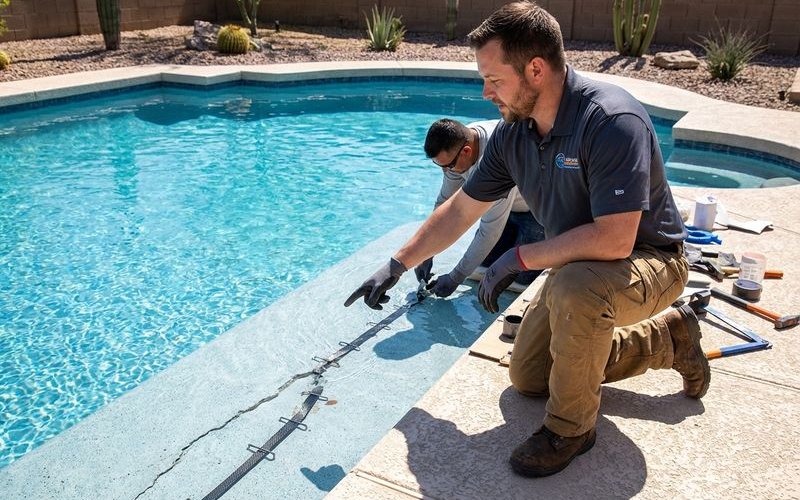
Method 3: The Hybrid Approach
Serious damage often requires both methods.
We frequently staple the crack to stop movement and then inject it to ensure watertightness.
This “belt and suspenders” approach offers the highest level of security against future leaks.
When Is Resurfacing Better Than Repair?
Patching isn’t always the smartest financial move.
We look at the “Total Surface Area” ratio to guide this decision.
Consider resurfacing when:
- Cracks cover more than 20% of the pool interior
- You hear a “hollow” sound when tapping the plaster (delamination)
- The current finish is over 15 years old
- Repair costs exceed 30% of a total resurfacing quote
Stick with repair when:
- Damage is isolated to one specific area
- The rest of the plaster is smooth and solid
- You plan to sell the home in the next 1-2 years
- The pool holds water well aside from the single leak
Cost Summary (2026 Estimates)
Prices in Phoenix have adjusted due to labor and material costs.
Here is what you should budget for reliable work.
| Issue | Recommended Method | Typical Cost | Time to Fix |
|---|---|---|---|
| Surface Crazing | Patch / Polish | $300 - $600 | 2-4 Hours |
| Hairline Leak | Epoxy Injection | $400 - $800 | 1 Day |
| Structural Crack | Steel Stapling | $900 - $1,800 | 1-2 Days |
| Severe Damage | Staple + Inject | $1,800 - $4,000 | 2-3 Days |
| Widespread Failure | Full Resurface | $6,000 - $18,000 | 5-7 Days |
The Repair-First Philosophy
David Resurface was founded with a simple mission: to provide exceptional pool remodeling and resurfacing services that customers can truly rely on.
We believe in saving the shell whenever possible.
Our protocol prevents upsizing a small problem into a massive renovation.
- Assess honestly: Is it cosmetic or catastrophic?
- Recommend appropriately: Use high-strength staples for structural issues, not just patch material.
- Consider timing: Winter (October-April) is the ideal time for major repairs in Arizona to avoid heat damage to empty pools.
- Prevent recurrence: Fix the drainage issue that caused the soil to move.
Honesty saves you money in the long run.
What Causes Pool Cracks?
Knowing the root cause protects your investment.
Ground Movement
Arizona soil is notorious for high clay content.
This “expansive soil” absorbs water and heaves upward, lifting the pool shell.
When it dries, it shrinks, leaving the heavy concrete unsupported.
Hydrostatic Pressure
Groundwater exerts immense force.
Draining a pool completely during our monsoon season (July/August) removes the internal weight counteracting that ground pressure.
The pool can literally “float” or crack down the center.
Construction Defects
Shortcuts show up years later.
Insufficient steel rebar spacing or gunite that was shot too thin (under 6 inches) leads to premature failure.
Age and Thermal Shock
Phoenix pools endure extreme temperature swings.
Going from 115°F days to 40°F winter nights causes concrete to expand and contract repeatedly, leading to fatigue cracks over decades.
Preventing Future Cracks
Smart maintenance extends the life of your repair.
- Seal your deck joints: Keep water from draining into the soil directly next to your pool shell by maintaining the mastic sealant.
- Balance your Calcium: Keep Calcium Hardness between 200-400 ppm to prevent water from leaching minerals out of the shell.
- Drain with caution: Never empty a pool completely without consulting a professional, especially in summer.
- Monitor vegetation: Large tree roots can exert thousands of pounds of pressure on pool walls.
Need a Crack Assessment?
We provide free assessments to give you peace of mind.
Our team identifies the specific type of failure and outlines a clear path to fixing it.
- Accurate crack classification
- Leak verification
- Transparent pricing
- Timeline planning
Contact us or call (602) 619-1234 to schedule your evaluation.
Need Help With Your Pool?
Our team has 15+ of experience helping Phoenix homeowners with pool resurfacing and renovation. Get a free, no-obligation estimate.