Pebble Tec vs Pool Plaster: Which Finish Is Right for Your Arizona Pool?
Comparing Pebble Tec and traditional plaster for Phoenix pools. Cost, durability, appearance, and which Arizona homeowners should choose each.
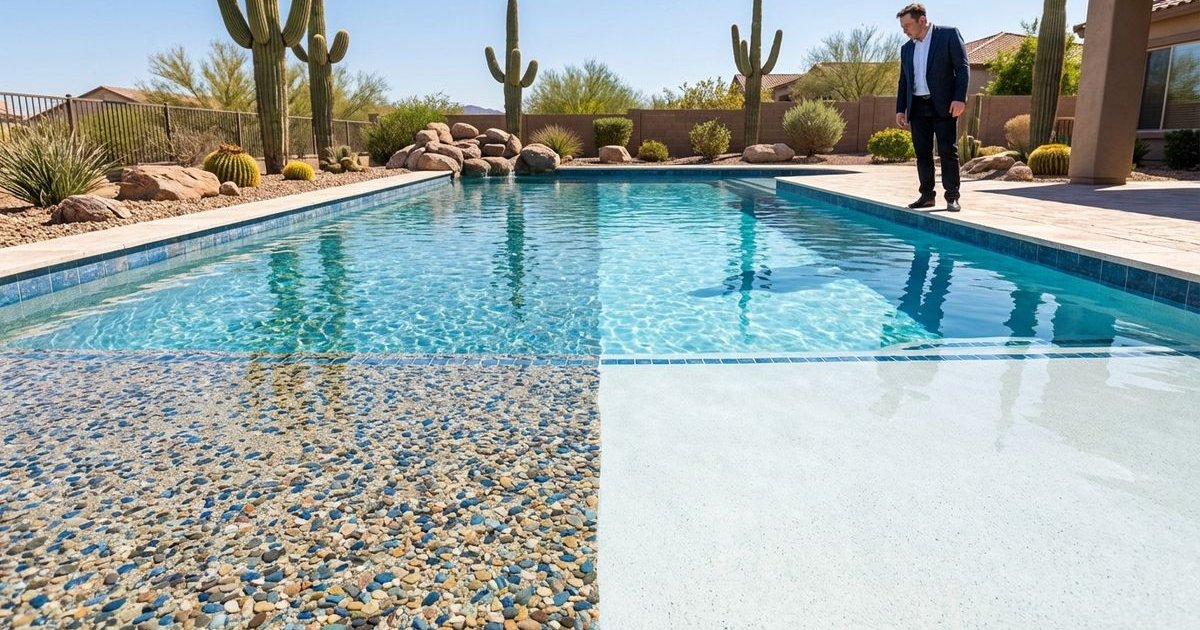
Trying to decide between Pebble Tec and traditional pool plaster? Both are excellent choices, but they serve very different needs. Here is an honest comparison to help you find the right fit for your backyard.
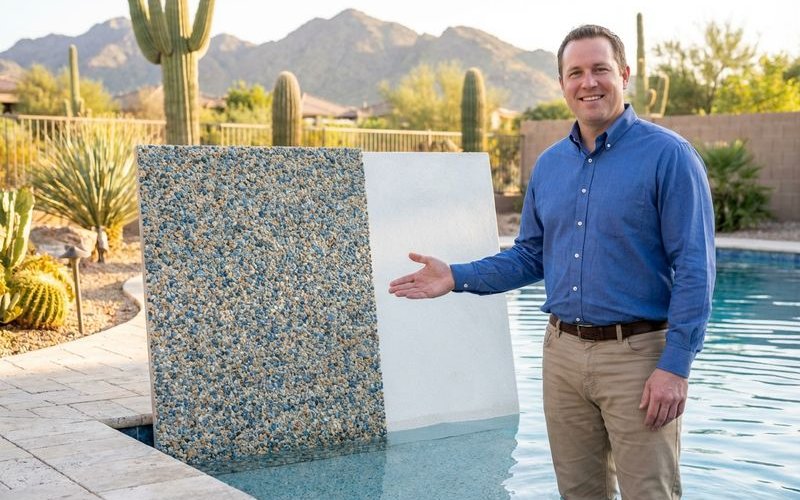
The Quick Comparison
| Factor | Pool Plaster (Standard Marlite) | Pebble Tec (Aggregate) |
|---|---|---|
| Phoenix Market Cost | $6,000 - $9,000 | $10,000 - $18,000 |
| Typical AZ Lifespan | 7-10 years | 20+ years |
| Texture/Feel | Very smooth (like eggshell) | Textured (like riverbed) |
| Chemical Tolerance | Low (sensitive to pH swings) | High (resists etching) |
| Mohs Hardness Scale | ~3.0 (Calcite) | ~7.0 (Quartz/Silica) |
| Warranty (Avg) | 2-5 years | 10-15 years |
Pool Plaster: The Classic Choice
Traditional white plaster has been the standard pool finish since the 1960s. We still apply this finish frequently for specific types of pool resurfacing renovations. This mix combines white Portland cement, marble dust, and water to create a crisp, clean surface.
Plaster Pros
Lower upfront cost You will likely pay 40% to 50% less for plaster compared to aggregate finishes. For a standard 15,000-gallon play pool in the Valley, this savings is significant.
Smooth feel Nothing rivals the feel of fresh plaster. It is gentle on feet, swimsuits, and skin.
Classic appearance The iconic “pool blue” color comes from light refracting off the white plaster background. It creates that bright, clean look found in resorts.
Easier repairs If a crack appears, a technician can patch plaster fairly easily. The repair might be slightly visible, but the structural integrity is simple to restore.
Plaster Cons
Vulnerability to Arizona chemistry Our local tap water is hard. Phoenix water averages 15 to 20 grains of hardness per gallon. High calcium levels aggressively attack soft plaster, leading to rough “calcium nodules” or etching within just a few years.
Shorter lifespan Expect 7 to 10 years maximum before the surface feels like 60-grit sandpaper.
Stains easily Plaster is porous. Leaves, algae, or even a dropped bobby pin will leave permanent rust or organic stains if not removed immediately.
High maintenance startup New plaster requires the “brush and filter” routine twice a day for two weeks. Neglecting this leads to permanent dust scaling.
Pebble Tec: The Premium Option
Pebble Tec uses small, smooth pebbles mined from riverbeds or quarries, bound together with durable cement. We often recommend this for homeowners who want a “one-and-done” solution. This category includes brands like PebbleTec®, PebbleSheen®, and Wet Edge.
Pebble Tec Pros
Superior durability The stones used are silica-based, rating a 7 on the Mohs Hardness Scale. This is significantly harder than the marble dust used in plaster.
Chemical resistance These finishes handle aggressive pH swings much better than plaster. You will not see the same pitting or etching if your water chemistry fluctuates during a monsoon storm.
Depth of color Options range from “Blue Lagoon” to deep “Black Pearl.” The aggregate creates a refraction that makes the water look deeper and more natural.
Hides imperfections The variegated texture camouflages dirt, debris, and minor surface inconsistencies.
Pebble Tec Cons
Higher upfront cost Materials must be trucked in, and the application requires a certified crew. Expect quotes starting around $10,000 for average-sized pools.
Textured feel This is the number one complaint we hear. Standard Pebble Tec uses stones around 3mm to 5mm in size. Some swimmers find this rough on sensitive feet.
Pro Tip: If texture is a worry, ask about “Mini Pebble” or “Pebble Sheen.” These use smaller aggregates (1mm to 2mm) that provide durability without the roughness.
Requires acid wash for brightness Over time, calcium buildup can dull the colors. You may need an acid wash every 5 to 7 years to restore the vibrancy.

Real Cost Comparison Over Time
Let’s break down the math for a typical Phoenix pool over a 20-year ownership period.
Scenario A: Plaster ($7,000 initial)
- Year 0: Install for $7,000.
- Year 10: Resurface needed due to roughness/staining ($9,000 adjusted for inflation).
- Total 20-Year Cost: $16,000+
- Hassle Factor: Two major construction projects in your backyard.
Scenario B: Pebble Tec ($12,000 initial)
- Year 0: Install for $12,000.
- Year 10: Zero resurfacing needed.
- Total 20-Year Cost: $12,000
- Hassle Factor: One construction project.
In this long-term view, the aggregate finish is actually cheaper.
Which Should You Choose?
Choose Plaster If:
- You are selling soon: If you plan to move within 3 to 5 years, you won’t recoup the investment of pebble.
- Budget is tight: Sometimes the extra $5,000 just isn’t available. Plaster is still a functional, clean option.
- Texture sensitivity is high: If you have family members with very sensitive skin, the smoothness of plaster is unbeatable.
Choose Pebble Tec If:
- This is your “forever home”: You want to fix the pool once and enjoy it for decades.
- You want modern aesthetics: The natural look of pebble instantly modernizes an older pool.
- You have dogs: Dog claws can scratch plaster. Pebble aggregate is too hard for them to damage.
- You want warranty protection: Most accredited applicators offer much longer warranties on pebble products.
The Middle Ground: Quartz
There is a third option often called “Quartz” or “Diamond Brite.” We mix crushed quartz into the plaster matrix. This creates a surface that is harder than standard plaster but smoother than pebble. It usually costs about 20% more than plaster but lasts 12 to 15 years.
Arizona-Specific Considerations
The desert environment changes how materials behave.
Thermal Shock Phoenix summer air hits 115°F while the pool water stays around 86°F. The waterline tile and finish undergo massive thermal expansion and contraction. Aggregate finishes resist the resulting “shear stress” better than brittle plaster.
Hard Water Scaling As water evaporates, calcium stays behind. On white plaster, this forms gray, rough scale that looks dirty. On a variegated pebble finish, this scale blends in visually, keeping the pool looking cleaner between tile cleanings.
UV Degradation The Arizona sun bleaches everything. Standard pool dyes in colored plaster often fade within two seasons. The stones in Pebble Tec are natural, meaning their color is geological, not chemical. They will not fade.
Still Not Sure?
We know this is a big investment for your home. Our team can bring physical samples of both plaster and various pebble textures to your backyard so you can feel the difference yourself. Contact us for a free consultation.
Need Help With Your Pool?
Our team has 15+ of experience helping Phoenix homeowners with pool resurfacing and renovation. Get a free, no-obligation estimate.