How to Extend Your Pool Finish Lifespan: 7 Maintenance Tips
Protect your Pebble Tec or plaster investment. Chemistry, brushing, and maintenance habits that help your pool finish last 15+ years.
How to Extend Your Pool Finish Lifespan: 7 Maintenance Tips
You just invested thousands in a beautiful new pool finish. How do you make it last as long as possible? These seven habits can add years to your Pebble Tec, Diamond Brite, or plaster surface.
Tip #1: Master the LSI (Not Just pH)
We see this mistake more than any other in the Phoenix Valley. Most homeowners only look at pH and chlorine, but those numbers tell only half the story. Our team relies on a metric called the Langelier Saturation Index (LSI) to determine if water is truly balanced.
Why LSI Matters More
The LSI combines pH, alkalinity, calcium hardness, water temperature, and cyanuric acid into one calculation.
- Negative LSI (< -0.3): Water is aggressive and will eat your calcium-based plaster or pebble grout to satisfy its hunger.
- Positive LSI (> +0.3): Water is scale-forming and will deposit rough white calcium layers on your decorative tile and spillways.
The Phoenix Hardness Factor
You are fighting an uphill battle against our local water supply. City of Phoenix water reports for 2024 show tap water calcium hardness often averaging 230 to 250 ppm, with some suburbs like Goodyear hitting over 400 ppm right out of the hose. Since pool water evaporates but calcium stays behind, your hardness levels rise rapidly.
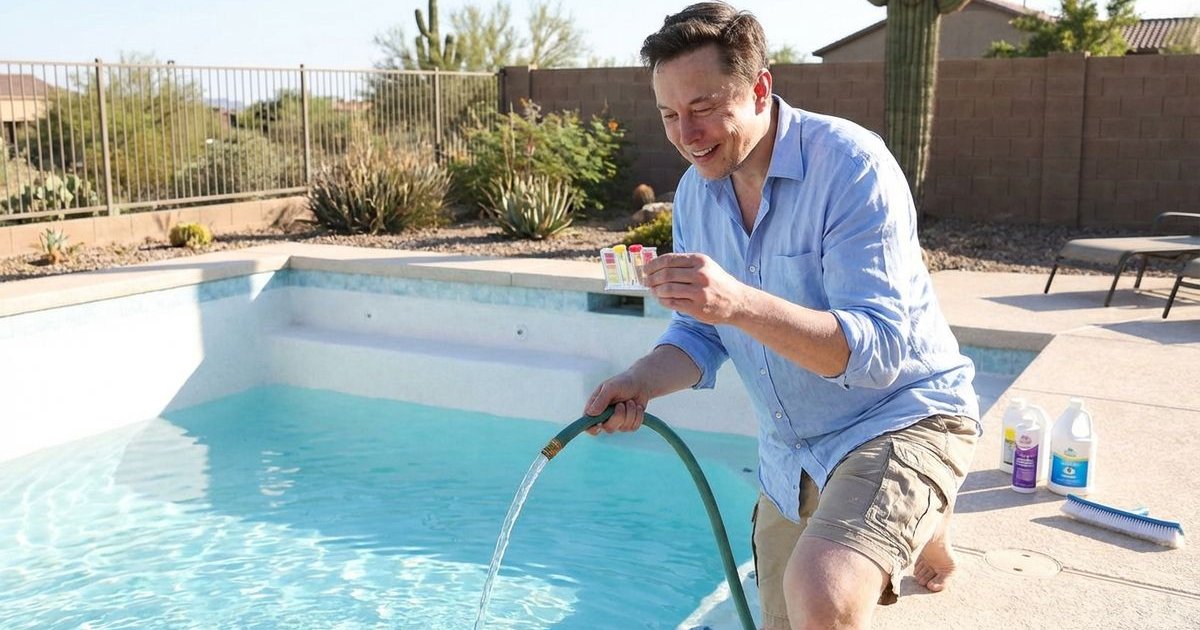
Pro Tip: Stop guessing with test strips. We recommend upgrading to a Taylor K-2006 Drop Test Kit. It uses a color-change titration method that is far more accurate for high-hardness water than color-matching strips. Once you have your numbers, plug them into the free Orenda App to get your exact LSI score and dosing instructions.
Tip #2: Brush Like You Mean It
Brushing isn’t just for algae prevention—it’s essential for finish health.
The Biofilm Connection
Microscopic bacteria create a protective layer called biofilm on your pool surface long before you see green algae. Regular brushing breaks this invisible shield, allowing your chlorine to actually do its job.
Recommended Protocol
- New finish (first 28 days): Brush twice daily to remove plaster dust.
- Plaster: 2-3 times per week.
- Pebble Tec/Diamond Brite: Weekly minimum.
Upgrade Your Tool
Standard nylon brushes require a lot of force to be effective. We suggest looking for a Wall Whale or similar finned brush. These tools use the water’s resistance to push the bristles against the wall for you, giving you 10x the scrubbing force with half the effort.
Warning: Never use a stainless steel brush on pebble surfaces. It can pop the aggregate stones loose and ruin the texture. Stick to nylon or hybrid brushes for aggregate finishes.
Tip #3: Prevent “Chlorine Lock”
Both too much and too little chlorine damage finishes.
The Cyanuric Acid (CYA) Trap
In Arizona, we use Cyanuric Acid (stabilizer) to protect chlorine from the sun. But there is a catch. Using Trichlor tablets adds more CYA to your water with every single tablet.
- Ideal CYA Range: 30-50 ppm.
- Danger Zone: Above 100 ppm.
When CYA gets too high, it creates “Chlorine Lock,” rendering your sanitizer ineffective regardless of how high your test reading is.
The Solution
We recommend switching to liquid chlorine during the cooler winter months. Liquid chlorine sanitizes without adding extra stabilizer, helping you keep your CYA levels in check. If your CYA is already over 100 ppm, the only effective fix is typically draining and refilling the pool.
Tip #4: Watch Your Salt Cell Life
If you have a salt pool, consistency matters:
The 10,000-Hour Rule
Most residential salt cells, like the Pentair IntelliChlor or Hayward T-Cell, are rated for approximately 10,000 hours of operation. This translates to roughly 5-7 years of life in our climate.
- Sign of Failure: If your salt levels test fine but chlorine production is low, your cell plates are likely depleted.
- Cleaning Caution: When cleaning your cell, never use straight muriatic acid. Always dilute it to a 4:1 ratio (4 parts water to 1 part acid) to protect the precious ruthenium coating on the plates.
Tip #5: Identify Stains Before Treating
Stains are easier to remove when fresh. Waiting lets them set permanently.
The Vitamin C Test
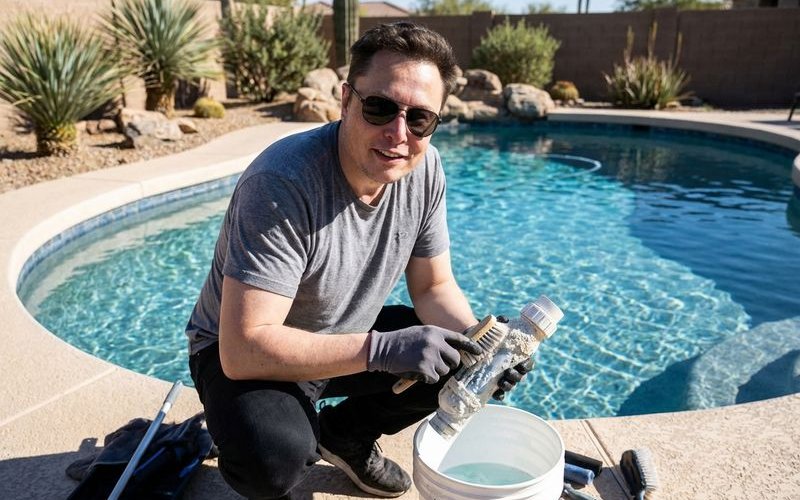
Before you buy expensive chemicals, try this simple diagnostic trick. Hold a Vitamin C tablet against the stain for 30 seconds.
- If it lightens: It is likely a metal stain (iron or copper). Treat with ascorbic acid or a metal sequestrant.
- If it does nothing: It is likely organic (leaves/algae) or biological. Treat with chlorine shock and brushing.
Common Stains and Fixes
| Stain Color | Likely Cause | Suggested Action |
|---|---|---|
| Brown/Green | Organic (Leaves) | Shock and Brush |
| Rust/Red | Iron | Ascorbic Acid Treatment |
| Blue/Green | Copper | Metal Sequestrant |
| White/Rough | Calcium Scale | Lower pH / Acid Wash |
Tip #6: Keep It Hydrated
Arizona sun is brutal on pool surfaces.
The “Hydration” Requirement
Pool plaster is a concrete product that needs to stay hydrated to maintain its structural integrity. When a pool is drained and the plaster dries out in the heat, it shrinks and cracks—a process called “spalling.”
Critical Rule: Never drain your pool when the temperature is above 85°F unless absolutely necessary. If you must drain it for repairs, we insist on keeping the surface wet with a sprinkler or hose constantly until it is refilled.
Evaporation Reality
In June and July, a typical Phoenix pool loses about 1/4 inch of water per day to evaporation. Keep your water level at the middle of the tile line. If it drops too low, the exposed tile grout can dry out and crack, leading to expensive beam repairs later.
Tip #7: The Bucket Test Verification
Even with perfect maintenance, professional eyes catch what you miss.
Is It a Leak or Evaporation?
Before paying for a professional leak detection service, perform the “Bucket Test.”
- Fill a 5-gallon bucket with pool water and set it on the pool steps (partially submerged).
- Mark the water level inside the bucket and outside the bucket.
- Wait 24 hours (pump running normally).
The Result: If the pool water (outside mark) dropped more than the bucket water (inside mark), you have a leak.
Professional Inspection Value
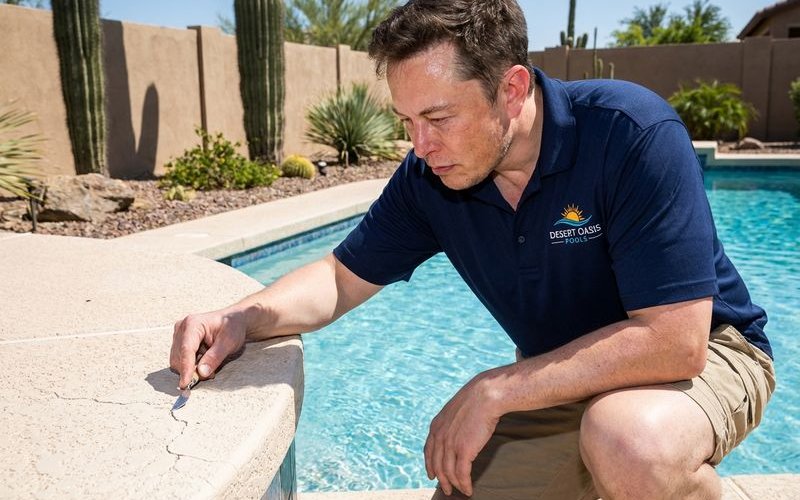
An annual check-up can catch small hairline cracks before they become structural failures. We use specialized listening devices to hear leaks underground that would otherwise wash away the soil supporting your pool shell.
Realistic Lifespans: National vs. Phoenix
Our extreme heat and hard water accelerate wear and tear compared to the national average.
| Finish Type | National Average | Phoenix Reality |
|---|---|---|
| Standard Plaster | 10-12 years | 7-10 years |
| Quartz (Diamond Brite) | 15-18 years | 12-15 years |
| Pebble (Pebble Tec) | 20+ years | 18-20+ years |
The difference is significant—proper care literally doubles the life of your finish.
What Voids Warranties
Be aware that improper maintenance can void manufacturer warranties:
- Positive Scaling: Allowing LSI to remain high causes scale, which is not a warranty defect.
- Chemical Burn: Leaving low pH (acidic water) for extended periods etches the surface.
- Draining in Heat: Structural cracks caused by drying out the shell are rarely covered.
- Wheeled Vacuums: Using wheeled cleaners (like a Polaris) within the first 28 days of a new finish can leave permanent wheel tracks.
Keep detailed records of your water testing logs. Manufacturers often ask for 12 months of chemistry history before honoring a claim.
Summary: The 7 Habits
- ✅ Master the LSI using the Orenda App
- ✅ Brush effectively with a finned brush
- ✅ Manage CYA levels to avoid Chlorine Lock
- ✅ Clean salt cells carefully (4:1 ratio)
- ✅ Diagnose stains with Vitamin C
- ✅ Keep plaster hydrated and filled
- ✅ Verify leaks with the Bucket Test
These habits cost little but add years to your investment.
Questions About Your Pool Finish?
Concerned about your surface condition? We offer free assessments to help you decide if it’s time for a repair or just a chemical adjustment. Contact us and we’ll take a look.
Need Help With Your Pool?
Our team has 15+ of experience helping Phoenix homeowners with pool resurfacing and renovation. Get a free, no-obligation estimate.