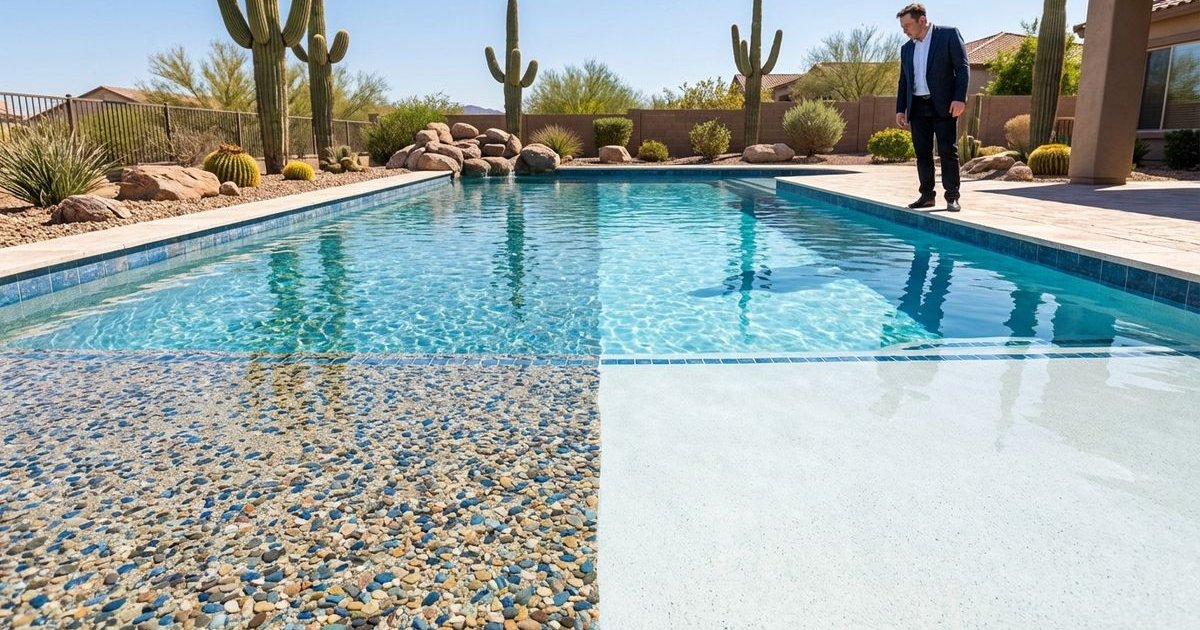
Cool Deck vs Pavers: Which Pool Deck Is Best for Arizona Heat?
Comparing Cool Deck coating and stone pavers for Phoenix pool decks. Surface temperature, cost, maintenance, and which keeps your feet cooler.
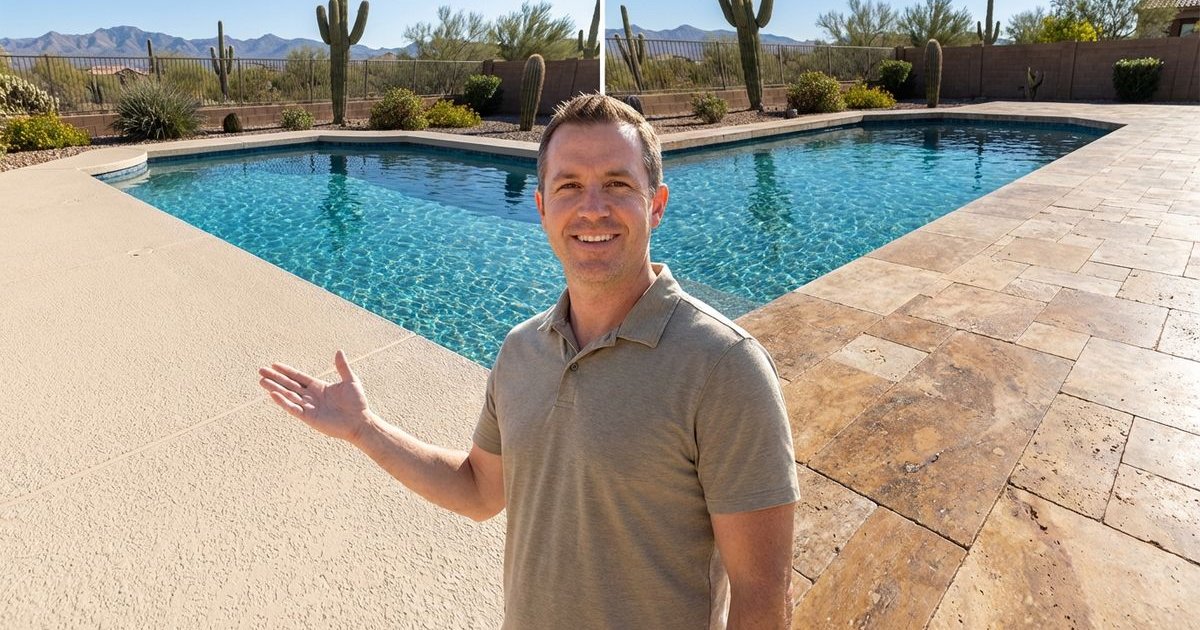
Cool Deck vs Pavers: Which Pool Deck Is Best for Arizona Heat?
When it’s 115°F outside, your pool deck choice isn’t just about aesthetics; it’s about whether you can walk to the water without burning your feet. You know that specific feeling in July when the heat radiating off the ground feels intense enough to melt your flip-flops.
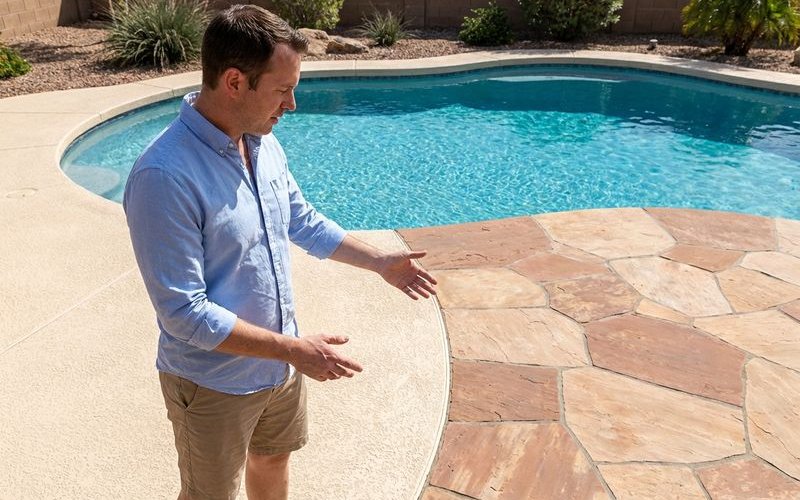
Our team has measured surface temperatures across Phoenix for years, and the data often surprises homeowners who assume stone is always hotter. We’re going to break down the real temperature differences we’ve recorded, the 2025 cost realities for both materials, and the maintenance trade-offs that usually don’t show up until year three.
The Heat Test: Which Is Actually Cooler?
This is the single most common question we get during consultations.
Surface Temperature Comparison
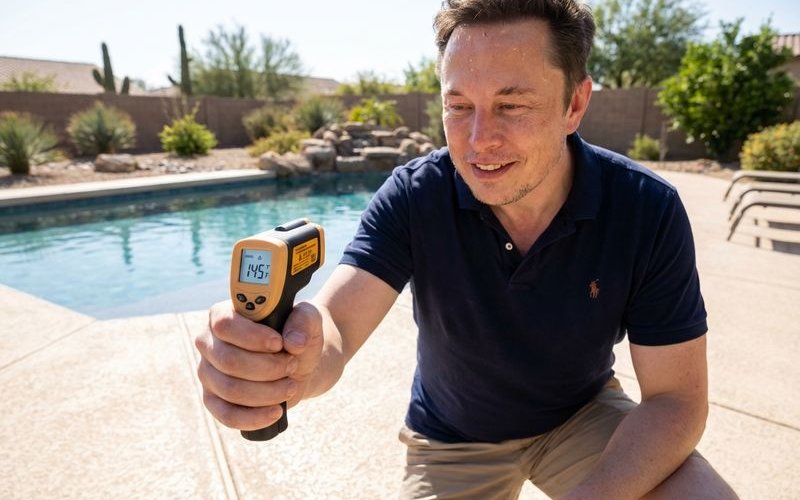
We used an infrared thermometer on a standard 110°F Phoenix afternoon to get these readings:
| Surface Type | Surface Temp | Walkable Barefoot? |
|---|---|---|
| Plain Concrete | 160°F - 167°F | Absolutely No |
| Cool Deck (Acrylic) | 125°F - 140°F | Yes (Quickly) |
| Light Travertine | 128°F - 138°F | Yes |
| Dark Porcelain | 149°F - 159°F | No |
The Verdict: High-quality, light-colored Travertine often beats standard Cool Deck. While both are significantly cooler than plain concrete, natural tumbled travertine in colors like “Ivory” or “Silver” has a porous structure that dissipates heat incredibly well.
Why They Stay Cooler
Cool Deck (Acrylic Overlay): This material reflects UV rays using lighter pigments and a textured “orange peel” surface that traps tiny pockets of air.
- Pro Tip: The texture is key; if you flatten it out too much during installation, you lose about 15% of that cooling capability.
Natural Stone Pavers: Travertine is a sedimentary rock formed by mineral springs, meaning it is naturally full of tiny holes. This porosity allows airflow through the stone itself, preventing it from holding onto heat like dense concrete or brick does.
Cost Comparison (2025 Estimates)
Prices in the Valley have shifted, and the gap between resurfacing and paving is stabilizing.
Cool Deck (Resurfacing)
- Average Cost: $4.00 - $8.00 per sq ft.
- Typical 500 sq ft Project: $2,000 - $4,000.
- Hidden Cost: If your existing concrete has major cracks, you might pay an extra $3-$5 per linear foot for proper crack chasing and epoxying before the coating goes down.
Travertine Pavers (New Install)
- Average Cost: $18.00 - $28.00 per sq ft.
- Typical 500 sq ft Project: $9,000 - $14,000.
- Hidden Cost: This price usually includes the demo of your old deck or the sand bed installation.
- Value Add: Real estate data suggests a paver deck returns about 60-70% of its cost in home value, whereas resurfacing is considered a maintenance item.
Total Cost Over 20 Years
Let’s look at the long game for a standard Phoenix pool deck:
| Item | Cool Deck Cost | Paver Cost |
|---|---|---|
| Initial Install | ~$3,000 | ~$11,500 |
| Year 7 Recoat | ~$2,000 | $0 |
| Year 14 Recoat | ~$2,500 | $0 |
| Maintenance | Low (Cleaning) | Medium (Sand/Weeds) |
| Total 20-Year Cost | ~$7,500 | ~$11,500 |
Resurfacing is cheaper upfront, but you are essentially signing up for a subscription service of future repainting.
Appearance and Style
Cool Deck
- The Look: A uniform, textured color that feels clean and consistent.
- Common Colors: “Desert Sand,” “Sedona Red,” and “Platinum Grey” are staples in Maricopa County.
- Best Feature: It creates a seamless, monolithic look that makes small decks feel larger.
Pavers
- The Look: Organic, luxury variation where no two stones are identical.
- Pattern: The “French Pattern” (a mix of four sizes) is the industry standard for breaking up grid lines and hiding stains.
- Best Feature: You can mix materials, like using a smooth bullnose coping for the pool edge and a tumbled paver for the main deck.
Winner: Pavers win on luxury, but Cool Deck wins on clean simplicity.

Durability and Maintenance
Cool Deck
The Reality: It works until the concrete underneath moves.
- The “Hollow Spot” Risk: In Arizona heat, the acrylic layer can delaminate (separate) from the concrete, creating bubbles that eventually crack.
- Repairability: Patching is easy, but matching the color of sun-faded decks is nearly impossible. You often have to repaint the whole thing to hide a patch.
Pavers
The Reality: The stones last forever, but the joints need work.
- The Weed/Ant Issue: Without a concrete base, ants love to burrow through the sand joints.
- The Fix: We strongly recommend using Polymeric Sand during installation. It hardens like grout when watered but stays flexible enough to prevent cracking, stopping weeds and bugs dead in their tracks.
Installation Considerations
For Cool Deck
Choose this if:
- Your concrete slab is structurally sound with only hairline cracks.
- You need the pool ready for a party next weekend (install takes 2-3 days).
- Insider Warning: Do not apply “Kool Deck” (the trademarked mortar product) to old concrete. It only bonds chemically to fresh poured concrete. For renovations, you always want an Acrylic Overlay.
For Pavers
Choose this if:
- Your current deck is heaving or has significant lift (pavers “float” over the ground issues).
- You want to eliminate the risk of ugly cracks appearing in the future.
- Insider Warning: Ensure your installer accounts for drainage. Pavers are porous, but the sub-base needs to slope away from your pool to prevent washouts during monsoon season.
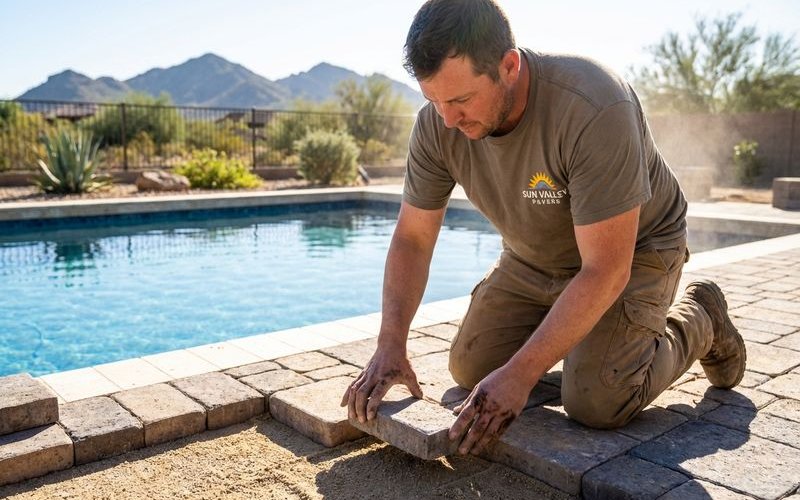
Which Should You Choose?
Choose Cool Deck If:
- ✅ Upfront cost is your biggest constraint ($3k vs $12k).
- ✅ Your concrete is flat and generally healthy.
- ✅ You prefer a seamless look without joints or patterns.
- ✅ Turnaround time matters more than long-term value.
Choose Pavers If:
- ✅ You want a permanent solution (25+ year lifespan).
- ✅ Resale value is a priority for your home.
- ✅ Your soil is active (pavers flex with the ground instead of cracking).
- ✅ You love the natural stone aesthetic of high-end resorts.
The Hybrid Approach
Homeowners often ask us if they can mix both to save money.
The Strategy: Install Travertine Coping (the edge around the pool) to give you that smooth, luxurious hand-hold and visual border. Then, use Cool Deck for the main walking areas.
This gives you the premium look at the water’s edge where you sit and dangle your feet, but keeps the total project cost down by 40%.
Arizona-Specific Advice
After years of resurfacing decks from Scottsdale to Gilbert, here is our honest take on the local climate factor.
Cool Deck is the practical champion. It handles our 115°F spikes well, but you must budget for that “refresh” coat every 5-7 years as the UV rays oxidize the binder.
Travertine is the “buy it once” investment. The only real enemy of travertine here is efflorescence (white powder deposits) from our hard water, but a simple acid wash every few years clears that right up.
If you plan to stay in your home for more than 5 years, the pavers usually pay for themselves by avoiding the second round of resurfacing costs.
Need Help Deciding?
We install both Cool Deck overlays and Travertine paver systems throughout the Valley. Our team can come out, take core samples of your existing deck, and tell you exactly which option your specific concrete slab can handle. Contact us for a free consultation and heat-test demonstration.
Need Help With Your Pool?
Our team has 15+ of experience helping Phoenix homeowners with pool resurfacing and renovation. Get a free, no-obligation estimate.