5 Signs Your Pool Needs Resurfacing (Don't Ignore #3)
How to know when it's time to resurface your pool. Rough texture, stains, cracks, and other warning signs Phoenix pool owners should watch for.
5 Signs Your Pool Needs Resurfacing (Don’t Ignore #3)
You know how tricky it can be to keep a pool balanced here in the Valley, especially when the summer heat hits triple digits?
It’s not just you.
We see this constantly with older pools where chemical maintenance stops being effective because the surface itself has failed.
From what I’ve seen, there is a clear tipping point where no amount of shocking or scrubbing can fix the problem.
Let’s look at the data, what your pool is actually telling you, and the specific signs that confirm it’s time for a renovation.
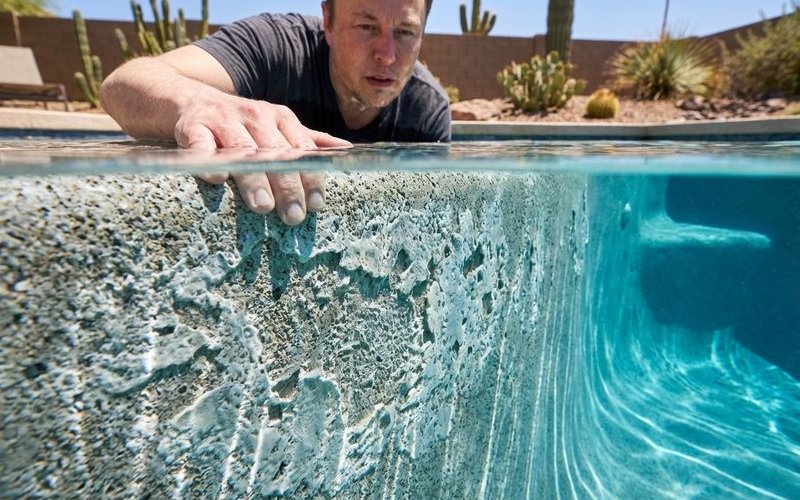
Sign #1: Rough, Sandpaper-Like Texture
Run your hand along the pool wall near the steps or the shallow end.
Does it feel sharp, like 80-grit sandpaper?
We often hear clients describe this as the “swimsuit snag test” because the surface becomes abrasive enough to ruin fabric or scrape knees.
This roughness is usually caused by etching, a chemical process where low calcium levels in the water leach the cement away, leaving only the sharp sand aggregate exposed.
The Insider Distinction: Many people confuse etching with scaling (calcium deposits). Here is a quick way to tell the difference:
- Scaling: Raised, rough white deposits that sit on top of the plaster.
- Etching: Pitted, sharp texture where the plaster has been eaten away.
Why it matters: Etching is permanent damage to the material itself.
Algae loves these pitted areas because they provide a perfect hiding spot that your brush bristles can’t reach.
The fix: If it is scaling, an acid wash might buy you a season. However, if the plaster is etched, pool resurfacing is the only way to restore a smooth finish.
Sign #2: Stubborn Stains That Won’t Clean
Every pool gets dirty, but there is a major difference between surface dirt and a permanent stain.
When you scrub a spot and it doesn’t budge, or if it returns immediately after chemical treatment, the stain has likely penetrated the porous plaster.
We use a simple “Pantry Test” to identify what you are dealing with before recommending a resurface.
The Stain Identification Matrix
| Stain Color | Probable Cause | The Test |
|---|---|---|
| Blue / Green / Black | Copper | Do NOT use Vitamin C (it makes copper worse). |
| Red / Brown | Iron | Place a Vitamin C tablet on the spot. If it lightens, it’s iron. |
| Organic (Brown/Green) | Leaves / Algae | Place a chlorine tablet on the spot. If it fades, it’s organic. |
Why it matters: In Phoenix, our water is naturally hard, often exceeding 400 ppm of Calcium Hardness.
This mineral-heavy water, combined with old porous plaster, creates a sponge-like effect that locks metals deep into the pool shell.
The fix: Once stains like copper penetrate the gunite shell, acid washing is often a waste of money. A fresh surface, particularly a dense aggregate like PebbleTec, offers superior resistance to chemical absorption.

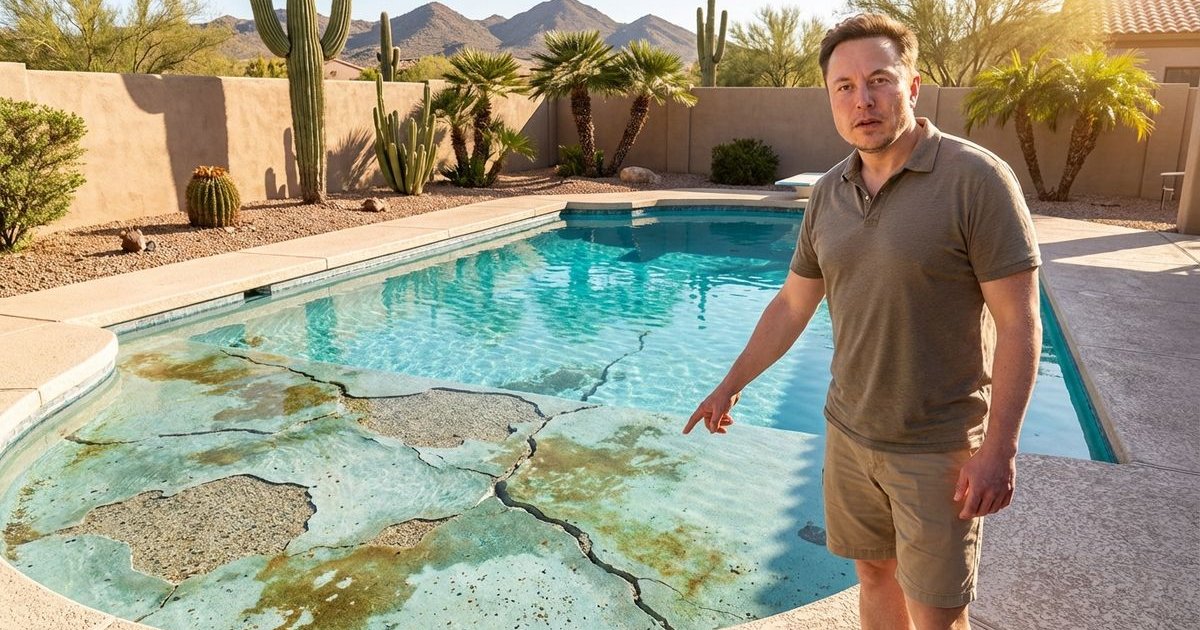
Sign #3: Visible Cracks (Don’t Ignore This One!)
This is the single most critical sign on this list.
While some surface crazing is normal in the dry Arizona heat, you must distinguish between cosmetic aging and structural failure.
Surface Cracks (Crazing)
These look like fine spider webs or shattered glass in the top layer of plaster.
They are generally shallow and result from shrinkage during the original curing process or extreme temperature swings.
Structural Cracks
These are the deal-breakers.
The “Credit Card” Rule: If you can insert the edge of a credit card (approx. 1/8 inch) into the crack, or if the crack runs down the wall and continues across the floor, you likely have a structural issue.
Why structural cracks matter:
- Leakage: They can leak thousands of gallons a year, eroding the soil support under your shell.
- Expansion: Soil movement often widens these cracks over time.
- Telegraphing: If you resurface over them without proper repair, they will crack the new surface within months.
The fix: We repair structural cracks using high-compression staples, such as Torque Lock staples, which apply 5,000 lbs of tension to keep the shell together.
The crack is then injected with epoxy before the new surface is applied.
Important: Never let a contractor simply “plaster over” a structural crack. It requires mechanical stabilization first.
Sign #4: Discoloration and Fading
Is your pool water looking dull even when the chemistry is perfect?
White plaster often turns a mottled gray or yellow over time due to a process called “hydration,” where water is trapped within the pool surface matrix.
Common discoloration issues include:
- Mottling: Cloudy, gray blotches that make the pool look dirty.
- Bleaching: UV radiation destroys the pigment in colored plaster.
- Translucency: As the top coat wears thin, the gray gunite shell starts showing through (often looks like a dark shadow).
Why it matters: While primarily cosmetic, widespread discoloration is a visual indicator that the protective coating has thinned significantly.
If you can see the gunite shell through the plaster, water is likely compromising the bond between layers.
The fix: A new surface restores the vibrant blue water color you want.
Updating to a quartz or pebble finish also adds a UV-resistant layer that holds its color 2-3 times longer than standard white plaster.
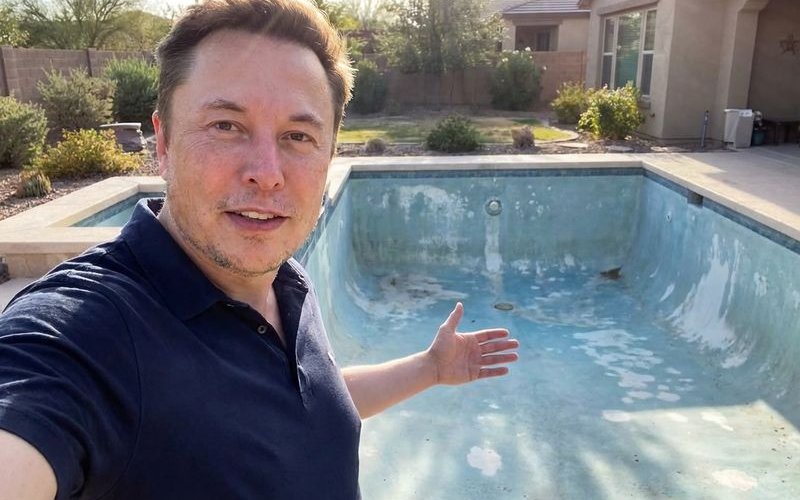
Sign #5: Plaster Popping or Delamination
Have you noticed hollow spots or blister-like bumps on the floor of your pool?
This is called delamination, often referred to as “pop-offs” in the industry.
It occurs when the bond between the plaster and the underlying concrete shell fails, creating an air pocket.
How to check for it: You can perform a “Sound Test” using a golf ball or the handle of a screwdriver.
- The Method: Gently tap the pool surface in suspect areas.
- The Result: Solid plaster sounds like a “clink,” while delaminated areas produce a distinct, hollow “thud” or drum sound.
What causes it:
- Bond Failure: Poor surface preparation during the original application.
- Ground Movement: Shifting soil puts stress on the rigid shell.
- Thermal Shock: Rapid temperature changes (filling a hot pool with cold water).
The fix: Delamination cannot be patched effectively because the surrounding area is usually failing too.
The entire surface needs to be chipped out (hydro-blasted or jackhammered) to ensure the new material bonds to solid concrete.
Bonus Sign: Your Pool Is Over 10-15 Years Old
Even if your pool looks okay, materials have a finite lifespan.
In the Phoenix area, our intense heat and hard water typically reduce these lifespans compared to national averages:
- Standard White Plaster: 7-10 years
- Quartz / Diamond Brite: 10-15 years
- Pebble Finishes: 15-20+ years
If your pool was built in the early 2010s and still has its original coat, you are living on borrowed time.
What If I Only Have One Sign?
You don’t always need to rush into a full renovation.
Here is a quick decision guide based on severity:
- One Sign (Minor Staining/Roughness): Monitor it. Adjust your calcium hardness and pH to prevent it from getting worse.
- Two Signs: Start saving. Plan for a renovation in the next 12-18 months.
- Three+ Signs: Schedule an assessment. Your maintenance costs are likely higher than the cost of financing a new surface.
- Any Structural Cracks: Act immediately. The risk of soil erosion and shell failure is too high to wait.
Free Assessment
Understanding the difference between a cosmetic annoyance and a structural failure can save you thousands.
We offer comprehensive on-site evaluations for Phoenix homeowners to give you clarity on your pool’s condition.
Our team will:
- Perform the “Sound Test” to check for hidden delamination.
- Measure cracks to determine if they are structural.
- Provide a clear, written timeline for when you actually need to resurface.
You get honest answers, not a sales pitch. Contact us or call (602) 619-1234 today to schedule your assessment.
Need Help With Your Pool?
Our team has 15+ of experience helping Phoenix homeowners with pool resurfacing and renovation. Get a free, no-obligation estimate.